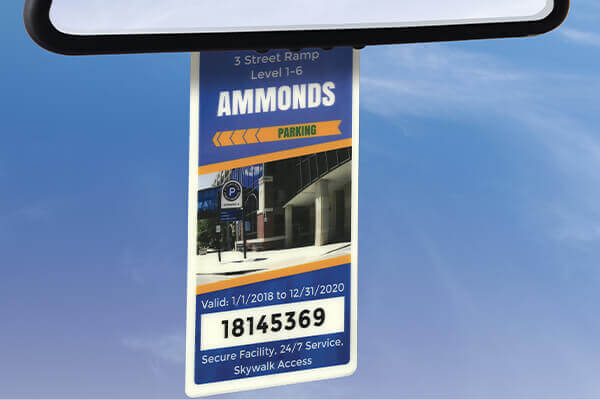
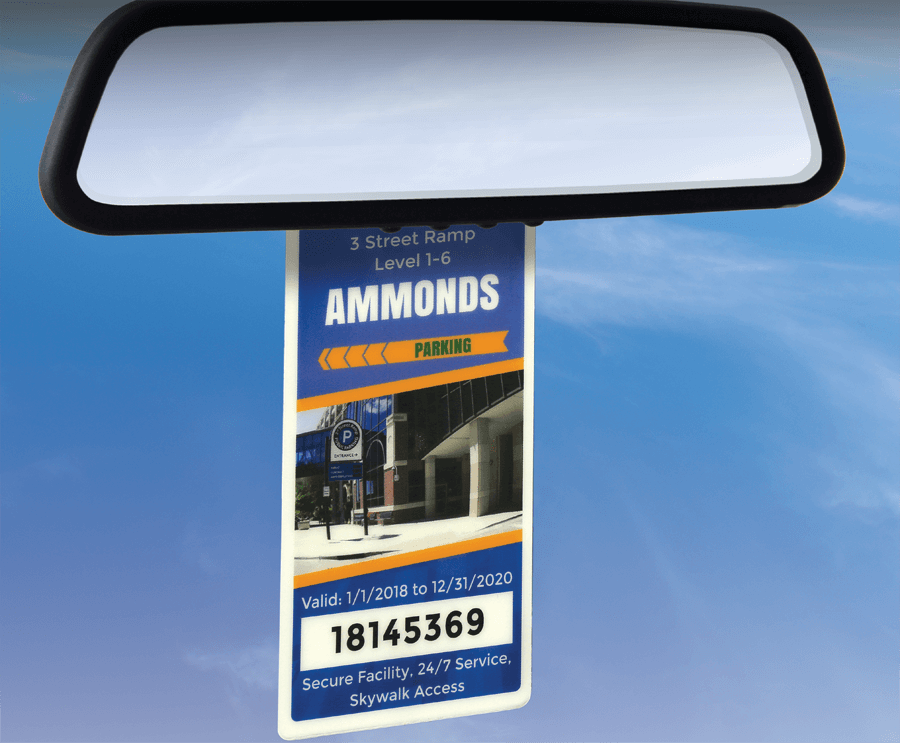
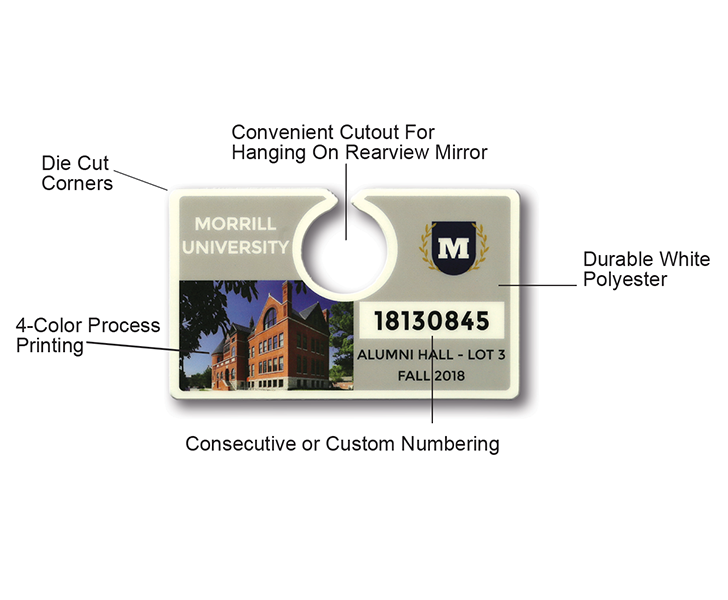
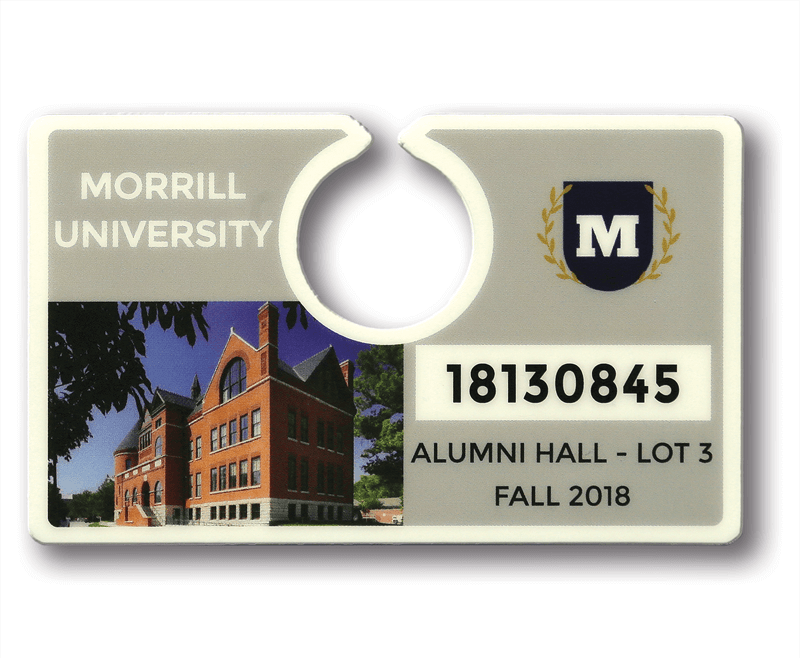
The Parking Permit Hang Tag is a long-lasting, reusable solution for access control in parking lots, gated communities, campuses, and workplaces. Made from thick, UV-resistant polyester, each tag is subsurface printed to protect your logo, numbering, and barcode from fading, scratching, or daily handling. These hang tags offer clear visibility from a rearview mirror, accurate barcode scans for gate or security systems, and easy removal when permits need to be reassigned or updated.
How Parking Hang Tags Improve Access Control
Parking hang tags improve access control by combining fast, highly accurate barcode scans with clear visual identification for attendants at gate arms or security checkpoints. Barcode technology delivers extremely reliable read rates, ensuring authorized vehicles are granted access without delays, while the printed tag allows for quick visual verification when needed. Because hang tags work seamlessly with any existing barcode-based system, they’re easy to implement without costly infrastructure changes.
Common Use Cases for Hang Tags
- Corporate parking lots
- Schools and universities
- Hospitals and clinics
- Residential and gated communities
- Event and temporary parking
| Material |
Polyester |
| Serialization |
Barcode and human readable equivalent is digitally printed - providing excellent clarity and easy scanning. Code 39 is the standard symbology with a range of 2.7 to 9.4 CPI (characters per inch). Optional symbologies available. |
| Label Copy |
The label copy may include block type, stylized type, logos or other designs |
| Colors |
Standard colors include black, red, yellow, green, dark blue, purple, orange or blue. Custom spot colors are also available at no additional charge. Due to contrast needed for the barcode scanner, all barcodes are black |
| Standard Adhesive |
Hanging tag |
| Sizes |
6.25" x 2.25", 4.175" x 2.55" |
| Packaging |
Shipped in "work-out-of" cartons for convenient application. |
Chemical Testing Summary
Test of label structure and printed image as well as readability of inlay.
Chemical Testing Data