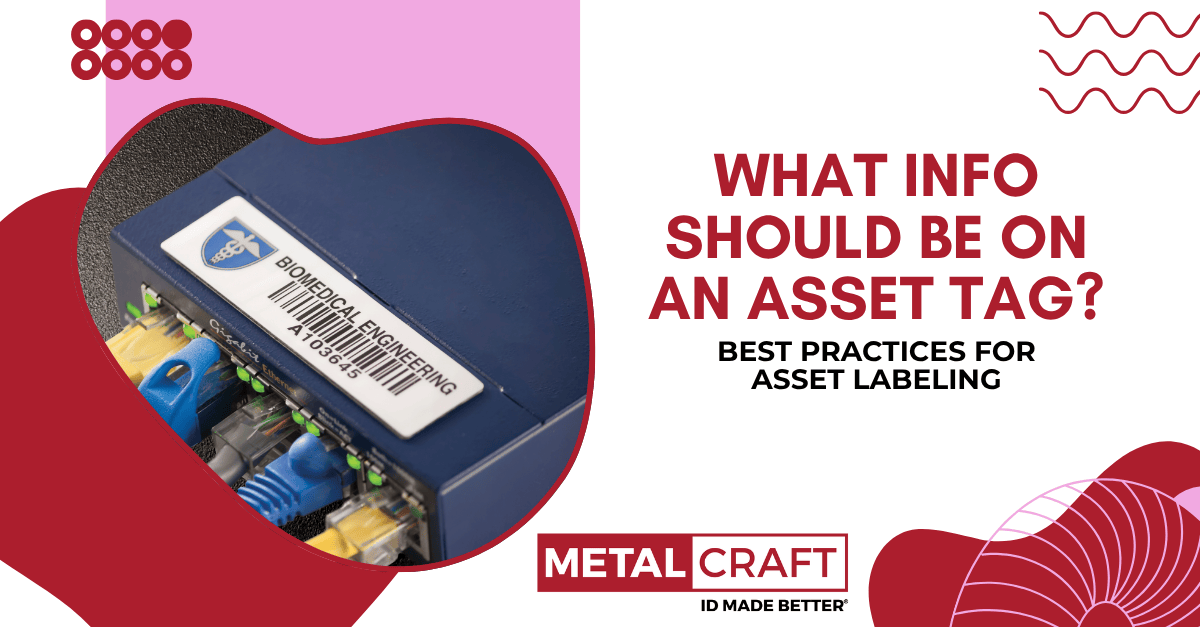
Asset labeling plays a critical role in keeping track of an organization’s assets, improving accountability, and ensuring compliance. Whether you’re managing IT equipment, machinery, or other physical assets across multiple sites, having a reliable asset tagging system is essential for maintaining accurate records and achieving operational efficiency.
Without proper asset tagging, businesses often struggle with lost or misplaced assets, inconsistent asset data, and costly manual data entry errors. Labels that fade, peel, or fail in harsh environments can further disrupt asset tracking efforts, leading to gaps in maintenance history, inaccurate inventory counts, and increased operational costs.
The most effective asset labels combine the right information, durable identifiers, and a well-structured asset tagging process. By implementing asset tagging best practices, organizations can improve visibility, reduce human error, and support smarter decision making. Metalcraft delivers industrial-grade asset tags, barcode tags, and RFID tags designed to withstand demanding conditions while supporting scalable asset tracking systems.
Why Asset Labeling Matters for Modern Operations
Improve Asset Visibility and Accountability
Asset tagging enables organizations to quickly identify and track assets throughout their lifecycle. By assigning a unique identifier—such as a serial number or sequential numbers—to each item, companies can monitor location, ownership, and usage history in real time.
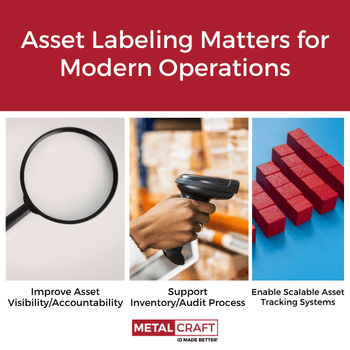
This level of visibility is essential for tracking assets like IT inventory, tools, and movable assets across departments or multiple sites. With a proper tagging system, individual assets are accurately identified, reducing loss, preventing duplication, and supporting loss prevention strategies for valuable resources.
Support Inventory and Audit Processes
Accurate asset data is the backbone of efficient inventory and audit processes. Asset labels allow teams to conduct faster audits and cycle counts using a barcode scanner or mobile phone, minimizing manual data entry and reducing human error.
When integrated with asset management software or inventory software, labeled assets can be scanned and updated instantly. This ensures accurate records, simplifies compliance reporting, and provides a reliable foundation for maintenance tracking and preventive maintenance planning.
Enable Scalable Asset Tracking Systems
A well-designed asset tagging system serves as the foundation for advanced asset tracking systems. Whether using barcode tags, QR codes, or RFID tags, these technologies allow organizations to scale their tracking capabilities as operations grow.
Modern systems can integrate with ERP platforms, CMMS tools, and mobile devices, enabling real-time tracking and data driven decisions. This scalability is especially important for organizations managing a large inventory or operating across multiple locations.
What Information Should Be on an Asset Tag?
Unique Asset Identifier
Every asset tag should include a unique identifier, such as a serial number or asset ID. This is the cornerstone of asset identification and ensures each asset is distinguishable from others.
A properly assigned identifier prevents duplication, avoids confusion, and allows organizations to track individual assets accurately throughout their asset lifespan. It also supports maintenance tracking, usage history, and better resource allocation.
Barcode or RFID Element
Including a barcode or RFID element transforms a simple physical tag into a powerful tool for automated tracking. Barcode tags allow assets to be scanned quickly with a barcode scanner or mobile phone, improving efficiency and reducing data entry errors.
RFID tags go a step further by using radio waves for bulk reading without line-of-sight scanning. This enables faster tracking of assets in high-volume environments and supports advanced technologies like NFC tags and field communication systems.
Company Name or Logo
Adding your company name or logo to asset labels clearly establishes ownership. This simple step deters theft, prevents asset mixing between departments or organizations, and reinforces accountability.
For high value or critical assets, branding can be a key component of loss prevention and asset management.
Contact Information (Optional)
Including contact details such as a phone number or website can help recover lost or misplaced assets. While optional, this information is particularly useful for organizations managing movable assets that frequently leave a controlled environment.
Barcode vs RFID on Asset Tags
When to Use Barcode Labels
Barcode tags are a cost effective solution for organizations with straightforward asset tracking needs. They are ideal for controlled environments where assets can be scanned individually.
Barcode systems are widely used for IT inventory, office equipment, and smaller asset tagging practices. They offer simplicity, affordability, and compatibility with most asset management software platforms.
When to Use RFID Tags
RFID tags are better suited for high-volume asset tracking and environments where speed and automation are critical. Using radio waves, RFID systems can scan multiple assets simultaneously, even without direct line-of-sight.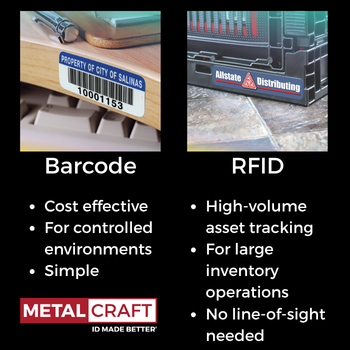
This makes RFID ideal for large inventory operations, industrial settings, and organizations tracking assets across multiple sites. RFID also supports advanced features like GPS trackers and real-time asset tracking systems.
Hybrid Labeling Strategies
Many organizations are adopting hybrid strategies that combine barcode and RFID technologies on a single physical tag. This approach provides flexibility, allowing teams to use barcode scanners for manual tracking and RFID readers for automated processes.
Hybrid tagging systems help future-proof asset tracking investments while supporting continuous improvement and evolving operational goals.
Best Practices for Asset Labeling
1. Use Durable Materials for Your Environment
One of the most important best practices for asset labeling is selecting materials that can withstand environmental conditions. Labels exposed to heat, chemicals, abrasion, or outdoor elements must be built for harsh environments.
Using durable identifiers ensures that asset labels remain legible and functional throughout the asset lifespan, reducing the need for replacements and avoiding costly repairs caused by lost tracking.
2. Ensure Strong Adhesion or Attachment
The effectiveness of an asset tagging system depends on how well labels stay attached. Permanent adhesives work well for smooth surfaces, while mechanical fastening may be needed for textured or irregular materials.
Choosing the right attachment method ensures tags remain secure on physical assets, supporting consistent tracking and accurate data collection.
3. Standardize Label Design Across Assets
Standardization is essential for efficient asset management. Consistent formatting across all asset labels ensures readability, simplifies scanning, and reduces confusion among users.
A standardized approach also improves data quality, making it easier to manage asset data and integrate with asset management software.
4. Prioritize Readability and Scan Accuracy
Overcrowded labels can hinder scanning and reduce usability. Keep designs clean, use proper barcode sizing, and maintain high contrast for readability.
Clear labeling helps teams quickly identify assets, improves scanning accuracy, and minimizes human error during audits and maintenance tracking.
5. Plan for the Full Asset Lifecycle
Asset labels should last as long as the asset itself. Planning for the full lifecycle minimizes replacement costs and ensures uninterrupted tracking.
Durable asset labels help maintain accurate records, support preventive maintenance, and contribute to long-term cost savings.
6. Incorporate Serialization and Data Management
A strong asset tagging process includes centralized data management. Assigning serialized IDs and linking them to a database allows organizations to update records, track usage history, and monitor asset performance.
This integration supports data driven decisions, enhances operational efficiency, and enables smarter resource allocation.
Choosing the Right Asset Tag Material
Polyester Labels
Polyester asset labels are a cost effective option for indoor environments. They provide good durability for controlled conditions and are commonly used for IT equipment and office assets.
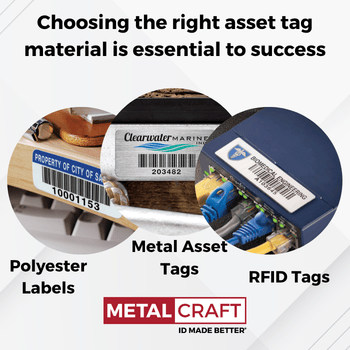
Metal Asset Tags
Metal asset tags offer extreme durability and are ideal for harsh environments. These tags can withstand heat, chemicals, and abrasion, making them suitable for industrial applications and long-term asset tracking.
RFID-Enabled Asset Tags
RFID-enabled asset tags combine durability with advanced tracking capabilities. These tags support automated tracking systems, improve operational efficiency, and are well-suited for organizations managing large inventories or high value assets.
Common Asset Labeling Mistakes to Avoid
Using Non-Durable Labels
Low-quality labels can fade, peel, or become unreadable over time. This leads to gaps in asset tracking, inaccurate records, and increased operational costs.
Overloading Labels with Information
Including too much information on a physical tag can reduce readability and scanning performance. Focus on essential data and store additional information in your asset management software.
Ignoring Environmental Conditions
Failing to consider environmental conditions can result in premature label failure. Always match label materials to the environment to ensure long-term performance.
Lack of Standardization
Inconsistent asset tagging practices create confusion and inefficiencies. Standardizing your tagging system improves clarity, supports accurate data entry, and enhances overall asset management.
Why Metalcraft for Asset Labeling Solutions
Metalcraft provides industrial-grade asset tags and labels designed to meet the demands of modern operations. From barcode tags to RFID tags, Metalcraft offers solutions that support both simple and advanced asset tracking systems.
With deep expertise in asset identification, Metalcraft delivers custom-engineered labels built for harsh environments and long-term durability. Their solutions are trusted across manufacturing, utilities, government, and other industries where tracking valuable assets is critical.
Whether you’re tagging fixed assets, IT equipment, or movable assets, Metalcraft helps organizations implement the right asset tagging system to improve operational efficiency, reduce costs, and support continuous improvement.
By following asset tagging best practices and using high-quality asset labels, businesses can unlock numerous benefits—from improved tracking and maintenance tracking to smarter decision making and long-term cost savings.
About the Author: John Fitzsimmons

Mobile Phone: 641-423-9460
Office Phone: 641-423-9460
Email: [email protected]
Office: 3360 9th St SW