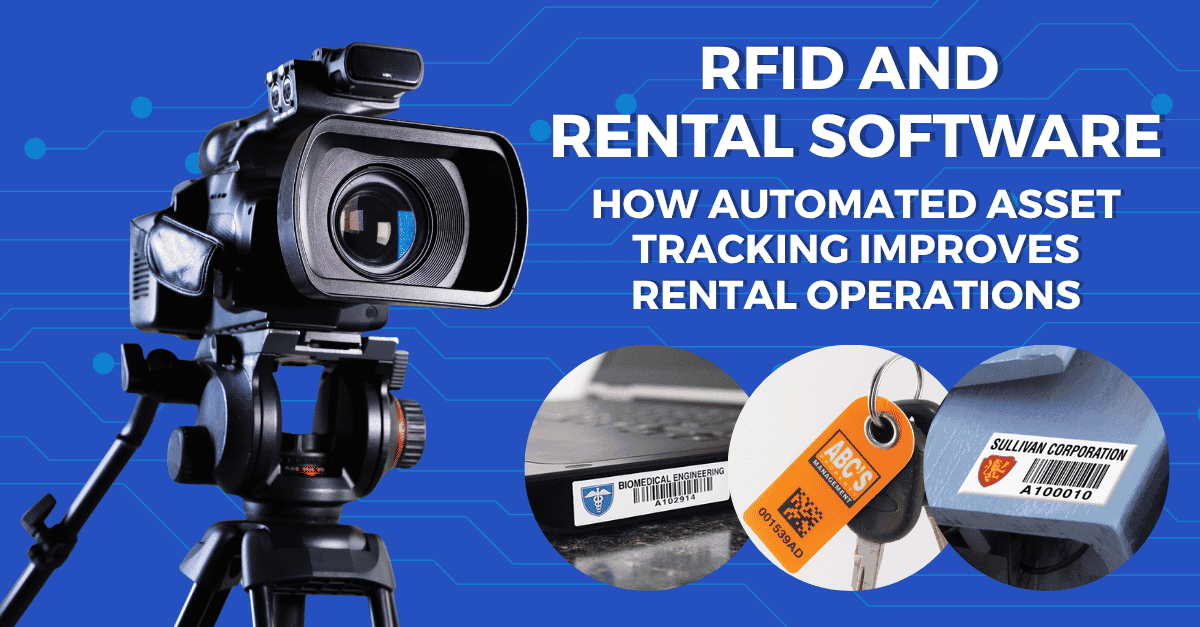
Rental software helps businesses manage equipment, contracts, billing, and customer relationships, but its effectiveness depends on one critical factor: accurate asset data. Without reliable visibility into equipment location, availability, and status, even the best rental software can struggle to support efficient operations.
For years, rental software has helped companies manage reservations, contracts, billing, maintenance schedules, and customer information. However, even the best rental software is only as accurate as the inventory data entered into it. When employees must manually update inventory records, physically scan assets, or reconcile inventory discrepancies across multiple locations, inefficiencies quickly emerge.
This is where RFID and rental software create a powerful combination.
By integrating RFID technology with inventory management software, rental businesses can automate data collection, improve inventory accuracy, reduce labor requirements, and gain real-time asset visibility. RFID readers can scan hundreds of items simultaneously, enabling batch check-ins, faster inventory audits, and more accurate equipment tracking.
Rather than replacing rental software, RFID enhances it. Together, RFID and rental software help organizations improve customer satisfaction, reduce asset loss, and operate more efficiently in increasingly competitive rental markets.
What Rental Software Does Well
Rental software serves as the operational backbone of modern rental businesses, helping organizations manage equipment, customers, financial transactions, and day-to-day workflows from a centralized platform. By consolidating operational data into a single system, rental software improves efficiency, supports better decision-making, and helps ensure equipment is utilized effectively throughout its lifecycle.
Managing Rental Transactions
Rental software helps companies manage:
- Reservations by allowing employees to schedule equipment rentals, verify availability, and prevent double bookings.
- Contracts through automated rental agreements, digital documentation, and standardized rental terms.
- Billing by generating invoices, calculating rental charges, tracking payments, and managing recurring fees.
- Customer records that store contact information, rental histories, account details, and communication logs.
- Equipment availability by tracking whether assets are available, reserved, rented, in transit, or undergoing maintenance.
- Return schedules that help employees monitor upcoming returns, overdue equipment, and future inventory availability.
These systems provide a centralized platform for managing rental operations and ensuring equipment is properly allocated. By maintaining accurate records and automating administrative tasks, rental software helps reduce manual work, improve customer service, and create greater visibility into inventory and operational performance.
Tracking Equipment Availability
One of the most valuable functions of rental software is providing visibility into equipment status and availability. Having accurate, up-to-date information helps rental businesses maximize utilization, avoid scheduling conflicts, and ensure customers receive the equipment they need when they need it.
Rental software tracks whether rental equipment is:
- Available and ready for immediate rental or reservation.
- Reserved for upcoming customer orders and future rental commitments.
- Out on rent and currently assigned to a customer or job site.
- Under maintenance for repairs, servicing, cleaning, or preventive maintenance activities.
- Awaiting inspection before being approved for the next rental cycle.
- In transit between locations, customers, or service facilities.
- Pending return and scheduled to come back into inventory soon.
This visibility helps employees provide customers with accurate availability information while improving scheduling and inventory planning. It also allows managers to make informed decisions about asset utilization, equipment purchases, maintenance scheduling, and fleet allocation. When inventory status is current and reliable, rental businesses can reduce downtime, improve customer satisfaction, and generate more revenue from existing assets.
Generating Operational Reports
Rental software and inventory management software provide valuable reporting tools that help organizations better understand fleet performance, inventory utilization, and overall business health. These reports transform raw inventory data into actionable insights that support smarter planning and more efficient rental operations.
Most inventory management software provides reporting capabilities for:
- Asset utilization to measure how frequently equipment is rented and identify underperforming or overutilized assets.
- Revenue performance to track rental income, profitability, and revenue trends across equipment categories, locations, or customer segments.
- Maintenance costs to monitor repair expenses, preventive maintenance activities, and the total cost of equipment ownership.
- Inventory status to provide visibility into available, reserved, rented, and out-of-service equipment.
- Equipment turnover to evaluate how often assets are rented and returned during a specific period.
- Asset lifecycle performance to help determine when equipment should be repaired, upgraded, or replaced.
- Customer demand trends to identify popular equipment categories and support future purchasing decisions.
These insights help managers make informed operational decisions while improving inventory planning, asset utilization, maintenance scheduling, and long-term business strategy. By leveraging accurate reporting, rental businesses can reduce unnecessary costs, improve operational efficiency, and maximize the return on their equipment investments.
The Inventory Visibility Challenge in Rental Businesses
While rental software provides valuable tools for managing reservations, billing, maintenance, and inventory records, many rental businesses still struggle with asset visibility. Equipment frequently moves between warehouses, job sites, customers, and multiple locations, making it difficult to maintain accurate, real-time inventory data. When inventory updates rely on manual processes, businesses can experience inventory discrepancies, misplaced equipment, delayed status updates, and reduced operational efficiency, all of which can impact customer service and profitability.
Manual Data Collection Creates Blind Spots
Many rental operations still rely heavily on barcode scanning and manual data entry to track equipment movement and inventory status. Employees must physically scan assets, update inventory records, verify equipment availability, and document asset transfers throughout the rental process. While these methods can be effective, they often become more difficult to manage as inventory grows and assets move across multiple locations.
This process creates opportunities for:
- Human errors caused by missed scans, incorrect data entry, or incomplete records.
- Delayed updates that prevent inventory systems from reflecting current equipment status.
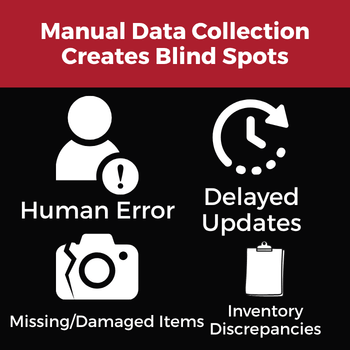
- Missing or damaged items that may go unnoticed until an audit or customer return.
- Inventory discrepancies between recorded inventory and actual asset locations.
These visibility gaps can make it harder for rental businesses to locate equipment, maintain accurate inventory records, and provide customers with reliable availability information.
Inventory Audits Consume Significant Time
Inventory counts are often one of the most labor-intensive and time-consuming processes in rental operations. As inventory grows and equipment moves between customers, warehouses, job sites, and multiple locations, maintaining accurate records becomes increasingly challenging. Routine audits are essential for verifying asset locations and equipment status, but they can consume valuable labor hours that could otherwise be spent serving customers or generating revenue.
Employees may spend significant time:
- Searching warehouses to locate equipment that may be misplaced or incorrectly recorded.
- Walking rental yards to physically verify the presence and condition of assets.
- Verifying equipment by checking serial numbers, asset IDs, and rental status.
- Reconciling inventory records to resolve discrepancies between system data and actual inventory.
These time-consuming inventory checks reduce productivity, increase labor costs, and can delay operational processes, especially for rental businesses managing large inventories or multiple locations.
Inventory Accuracy Directly Impacts Revenue
Accurate inventory data is critical to the success of any rental operation. When inventory records do not accurately reflect the location, availability, or status of equipment, businesses can face operational disruptions that directly affect revenue and customer satisfaction. Even small inventory discrepancies can create scheduling conflicts, reduce asset utilization, and make it difficult for employees to confidently fulfill customer requests.
When inventory records are inaccurate, rental businesses may:
- Miss rental opportunities because available equipment cannot be located or is incorrectly listed as unavailable.
- Purchase duplicate assets when existing equipment cannot be found within the inventory system.
- Delay customer orders while employees search for equipment or verify inventory status.
- Lose revenue due to underutilized assets, missed bookings, and inefficient inventory management.
Accurate inventory management helps rental businesses maximize equipment utilization, improve customer service, reduce unnecessary spending, and increase overall profitability.
How RFID Technology Works With Rental Software
RFID technology automates inventory tracking and data collection by capturing asset information without requiring manual scanning or direct line-of-sight visibility. When RFID tags are attached to rental equipment, RFID readers can automatically identify and track assets as they move throughout the rental process. This data is then transmitted directly into rental software and inventory management systems, providing real-time updates on equipment status, location, and availability. By reducing manual data entry and automating routine tracking tasks, RFID helps rental businesses improve inventory accuracy, streamline operations, and maintain better visibility into their assets across warehouses, job sites, and multiple locations.
RFID Tags Create Unique Equipment Identities
At the core of every RFID system is the RFID tag. Each RFID tag contains a microchip and antenna that store a unique identifier along with other asset-specific information. This unique identifier allows rental businesses to distinguish individual pieces of equipment and maintain accurate records throughout the asset lifecycle.
Unlike traditional barcodes, RFID tags can store more data, including:
- Asset numbers used to uniquely identify rental equipment within inventory systems.
- Maintenance records that help track service history and preventive maintenance activities.
- Inspection histories that document safety checks, certifications, and equipment condition.
- Ownership information that supports accountability and asset verification.
- Equipment status such as available, rented, in transit, under maintenance, or awaiting inspection.
RFID tags can also be engineered for a wide range of operating environments. Specialized RFID tags are available for tracking tools, construction equipment, power tools, flight case inventory, medical equipment, cables, and other high-value assets. Some RFID solutions are designed specifically for harsh environments, while others are optimized for unique applications such as assets mounted on glass surfaces or equipment that experiences frequent handling and movement. This flexibility allows rental businesses to deploy RFID technology across virtually every asset category within their inventory.
RFID Readers Automatically Capture Data
RFID readers serve as the communication link between RFID tags and rental software systems. They emit radio signals that activate nearby RFID tags and capture the data stored on each tag. When tagged items enter the reader’s read zone, the RFID reader can identify and collect information from multiple items simultaneously without requiring direct line of sight or manual alignment. Unlike barcode systems, which require employees to physically scan each asset one at a time, RFID readers can automatically capture data from dozens or even hundreds of tagged items in seconds. This capability supports bulk scanning, faster inventory counts, automated check-in and check-out processes, and more efficient inventory management across warehouses, rental yards, service departments, and multiple locations.
RFID Data Flows Into Rental Software
RFID systems deliver the greatest value when integrated with existing inventory management software and rental software platforms. Once integrated, RFID technology automates the flow of inventory data by capturing asset information and updating records in real time, eliminating much of the manual data entry required by traditional tracking methods. As rental equipment moves through the operation, RFID readers and gateways can automatically update equipment status, location, and availability within the software system. For example, RFID gateways installed at dock doors, warehouse exits, staging areas, service departments, or receiving locations can instantly record asset movement as equipment passes through. This automation helps ensure inventory data remains accurate and current, improves asset visibility, reduces inventory discrepancies, and gives employees immediate access to reliable information when managing reservations, maintenance schedules, check-ins, check-outs, and customer requests.
Key Benefits of Combining RFID and Rental Software
Faster Check-In and Check-Out Processes
One of the biggest advantages of RFID tracking is speed. Traditional inventory processes often require employees to manually scan equipment one item at a time, which can create bottlenecks during busy pickup and return periods. By automating asset identification, RFID helps rental businesses process equipment more quickly and efficiently while reducing labor requirements and improving customer service.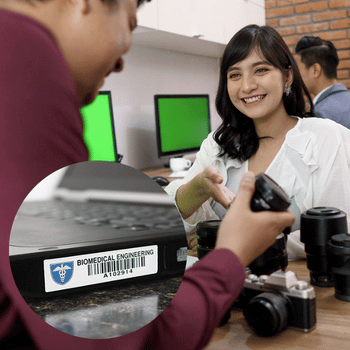
RFID enables:
- Batch check-ins that allow multiple returned assets to be processed at the same time.
- Batch check-outs that accelerate equipment pickups and reduce customer wait times.
- Bulk scanning of large quantities of tagged items without requiring direct line of sight.
- Automated equipment verification that confirms the correct assets are being checked in or out.
Instead of individually scanning each asset, employees can process hundreds of tagged items in seconds. This streamlined process improves operational efficiency, reduces errors, and helps rental businesses deliver faster, more accurate service to their customers.
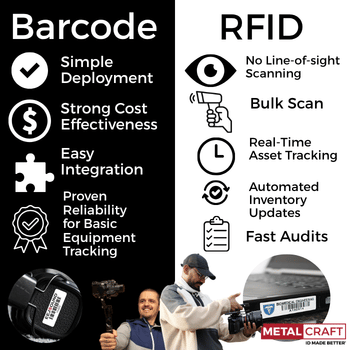
Many organizations combine RFID and barcode technologies.
For example:
- High-value equipment receives RFID tags.
- Lower-value assets use barcode labels.
- Rental software manages both systems.
This hybrid approach balances cost and performance while supporting future growth.
Common Integration Points Between RFID and Rental Software
RFID enhances multiple areas of rental operations.
Inventory Management
RFID provides automated updates for:
- Equipment availability
- Asset status
- Inventory counts
- Asset locations
Maintenance Management
RFID technology can facilitate automated maintenance processes by linking maintenance records to specific assets.
Location Tracking
RFID tracking provides greater visibility across warehouses, service departments, rental yards, and multiple locations.
Utilization Reporting
Accurate RFID data helps managers better understand asset utilization and equipment performance.
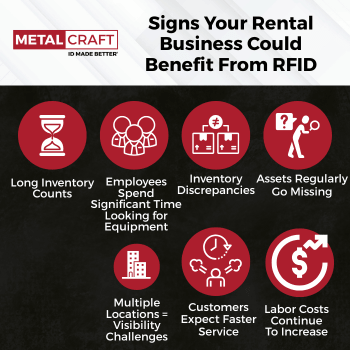
Signs Your Rental Business Could Benefit From RFID
You may be ready for RFID solutions if:
- Inventory counts take too long
- Employees spend significant time searching for equipment
- Inventory discrepancies occur frequently
- Assets regularly go missing
- Multiple locations create visibility challenges
- Customers expect faster service
- Labor costs continue to increase
These common challenges often indicate that manual inventory processes are limiting growth.
Choosing the Right RFID Solution for Your Rental Business
Successfully implementing RFID requires more than simply attaching tags to equipment. Rental businesses should carefully evaluate their operational requirements, inventory volume, equipment types, and technology infrastructure to ensure they select a solution that delivers long-term value. Taking the time to assess these factors upfront can help reduce implementation challenges, improve user adoption, and maximize return on investment.
Existing Rental Software Capabilities
Before investing in RFID hardware, determine whether your current rental software or inventory management software supports RFID integration. Some platforms offer native RFID functionality, while others may require third-party integrations, custom development, or API connections. Understanding how RFID data will flow into your existing system helps ensure inventory updates, asset tracking information, maintenance records, and equipment status changes are captured accurately and automatically. Evaluating software compatibility early in the process can prevent costly implementation issues later.
Equipment and Environment
Not all RFID tags are designed for the same applications. Rental businesses should select RFID tags that match the specific equipment being tracked and the environments in which those assets operate. Factors such as equipment material, asset size, exposure to moisture, temperature fluctuations, physical impacts, and outdoor conditions can all influence tag performance. Specialized RFID tags are available for power tools, construction equipment, medical equipment, flight cases, cables, and other rental assets. Choosing the right tag helps ensure reliable read performance and long-term durability.
Reader Requirements
RFID readers play a critical role in capturing asset data and delivering real-time visibility. The ideal RFID infrastructure often includes a combination of reader types based on operational workflows and facility layouts.
Organizations may choose from:
- RFID handhelds for mobile inventory counts, asset searches, and equipment verification.
- Fixed readers for continuously monitoring equipment movement through specific areas.
- RFID gateways installed at dock doors, warehouse exits, service departments, or staging areas to automatically record asset movement.
- Warehouse readers designed to support inventory management, receiving, shipping, and storage operations.
Selecting the right mix of readers helps ensure accurate data collection while supporting the specific needs of the rental operation.
Start With a Pilot Program
Rather than deploying RFID across the entire organization immediately, many businesses begin with a pilot program. Testing RFID within a specific department, location, equipment category, or workflow allows organizations to evaluate performance, identify potential challenges, and measure operational improvements before making a larger investment. A pilot program can help verify read accuracy, validate software integrations, refine processes, and calculate expected ROI. This phased approach reduces risk while providing valuable insights that support a successful full-scale RFID deployment.
Conclusion
Rental software manages the business. RFID improves the quality, speed, and accuracy of the inventory data flowing into that software.
Together, RFID and rental software create a more automated, efficient, and scalable rental operation. By improving inventory accuracy, reducing labor costs, enabling real-time asset visibility, and automating inventory management processes, RFID helps rental businesses operate more effectively while delivering a better customer experience.
For organizations struggling with inventory discrepancies, missing equipment, time-consuming audits, or visibility challenges across multiple locations, RFID may be the key technology needed to unlock the next level of operational performance.
About the Author: John Fitzsimmons

Mobile Phone: 641-423-9460
Office Phone: 641-423-9460
Email: [email protected]
Office: 3360 9th St SW