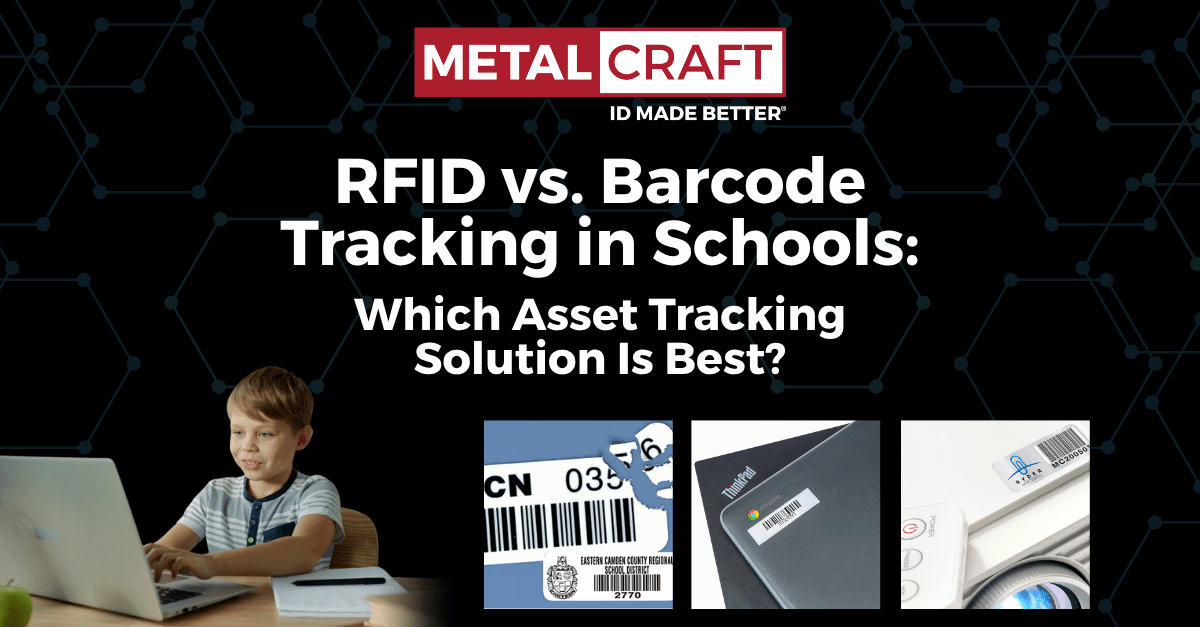
Schools today manage more technology and shared resources than ever before. Laptops, Chromebooks, tablet carts, projectors, makerspace tools, lab equipment, sports gear, and library materials all move constantly between classrooms, departments, and campuses. Without a reliable asset tracking system, educational institutions often struggle with missing devices, time-consuming audits, inefficient manual processes, and limited visibility into asset usage.
For K–12 IT Directors, School District Operations Directors, Procurement Managers, and school administrators, the challenge is balancing accountability and operational efficiency while staying within budget. Schools increasingly rely on asset tracking to reduce loss, simplify audits, improve resource management, and support better long-term planning.
That leads many districts to the same question: should they choose RFID or barcode tracking?
Barcode systems offer affordability, simplicity, and minimal training requirements. RFID systems provide faster inventory management, automated tracking, and better visibility into high-value assets. Both technologies can improve audit accuracy and reduce human error, but the right choice depends on your school setting, asset volume, and operational goals.
Metalcraft provides durable barcode labels and RFID tags designed specifically for demanding school environments, helping districts build scalable tracking solutions for everything from library books to student-issued devices.
Why Schools Need Asset Tracking Systems
Reduce Lost or Missing Devices
Schools invest heavily in student technology and shared equipment. Without structured asset management, devices can easily become misplaced, transferred between classrooms without documentation, or lost entirely.
An effective asset tracking system improves accountability for valuable assets like laptops, tablets, RFID badges, student ID cards, and lab equipment.
Speed Up Annual Audits
Traditional inventory audits often involve manually scanning equipment one asset at a time. These manual methods create bottlenecks and pull school staff away from higher-priority tasks.
RFID and barcode systems help schools significantly reduce costs associated with lengthy inventory checks while improving accurate data collection.
Improve Shared Resource Management
Schools frequently share AV carts, STEM tools, library materials, and sports gear across departments and buildings. Detailed tracking helps administrators understand an asset’s location and availability while reducing duplicate purchases.
Support Budget Planning
Better inventory management gives school administrators improved visibility into equipment lifecycles, replacement schedules, and purchasing needs. This supports smarter budgeting and long-term operational planning.
What Is Barcode Tracking in Schools?
How Barcode Asset Tracking Works
Barcode technology uses barcode labels or barcode tags assigned to individual assets. School staff use barcode scanners or barcode readers to manually scan each item and update inventory records.
Unlike RFID technology, barcode scanning requires a direct line of sight between the barcode and scanner.
Benefits of Barcode Tracking
Barcode systems remain popular in educational institutions because they offer several key benefits: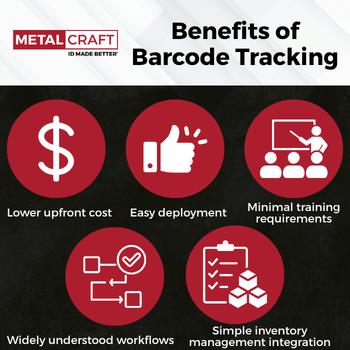
- Lower upfront cost
- Easy deployment
- Minimal training requirements
- Widely understood workflows
- Simple inventory management integration
Barcode and RFID solutions both improve accountability, but barcode systems are often easier for smaller schools to implement quickly.
Common School Barcode Use Cases
Barcode tracking is commonly used for:
- Library books
- Classroom supplies
- Furniture
- Barcode ID cards
- Low-to-mid value equipment
For schools with smaller inventories or limited budgets, barcode scanning may provide sufficient visibility without requiring a larger technology investment.
What Is RFID Tracking in Schools?
How RFID Asset Tracking Works
RFID tracking uses RFID tags and RFID readers to automatically identify and track assets using radio frequency identification technology.
Unlike barcode technology, RFID systems do not require direct line scanning. RFID readers use electromagnetic fields and radio waves to communicate with passive tags or active RFID tags attached to assets.
An RFID reader can read multiple tags simultaneously, allowing schools to scan equipment much faster than traditional barcode scanning.
Benefits of RFID Tracking
RFID based systems offer several advantages for educational institutions: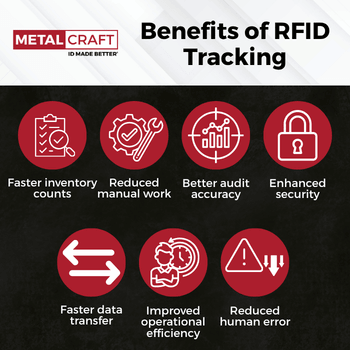
- Faster inventory counts
- Reduced manual work
- Better audit accuracy
- Enhanced security
- Faster data transfer
- Improved operational efficiency
- Reduced human error
RFID tracking also creates a digital audit trail that helps school staff monitor asset movements and usage history.
Common School RFID Use Cases
RFID solutions are especially valuable for tracking:
- Laptops and Chromebooks
- Tablet carts
- AV equipment
- Lab equipment
- Shared technology devices
- RFID cards and attendance tracking systems
Metalcraft’s RFID solutions are designed specifically for high-value school assets that experience constant handling and movement.
RFID vs Barcode Tracking in Schools: Key Differences
1. Upfront Cost
Barcode systems generally involve lower startup costs because barcode labels and barcode scanners are relatively inexpensive.
RFID systems typically require a larger upfront investment for RFID tags, RFID readers, and software integration.
However, schools implementing RFID often realize significant cost savings over time through reduced labor and faster inventory management.
2. Inventory Speed
Barcode scanning requires staff to manually scan one item at a time.
RFID technology allows users to read multiple tags simultaneously without requiring direct visibility. This dramatically improves inventory speed for schools managing large device fleets.
3. Accuracy and Visibility
Barcode systems rely heavily on manual processes, increasing the risk of human error and missed scans.
RFID and barcode tracking both improve accountability, but RFID systems offer more automated and detailed tracking capabilities.
RFID data can also support attendance tracking, access control, and resource management workflows.
4. Labor Requirements
Barcode tracking requires more staff involvement during audits because employees must manually scan each asset individually.
RFID tracking reduces audit workload and administrative processes by automating much of the scanning process.
For districts conducting frequent audits, RFID can significantly reduce costs associated with labor and downtime.
When Barcode Tracking Is the Right Fit for Schools
Tight Budgets
Schools with limited budgets often prefer barcode systems because they require lower upfront investment.
Smaller Schools or Single Campuses
Educational institutions with fewer assets and less equipment movement may not require advanced RFID tracking capabilities.
Basic Audit Needs
If a school only performs periodic inventory counts, barcode technology may provide enough functionality without implementing RFID.
When RFID Tracking Makes More Sense
Large Device Fleets
Schools managing large numbers of student-issued laptops and tablets often benefit from RFID systems because they simplify audits and improve asset visibility.
Shared Equipment Across Buildings
RFID tracking improves utilization and visibility for assets moving between classrooms, labs, and campuses.
Frequent Inventory Audits
Schools conducting regular audits can save substantial staff time using RFID technology.
High Asset Loss Concerns
RFID systems help reduce replacement costs by improving accountability and automatically identifying missing assets faster.
Metalcraft’s education RFID solutions are designed for laptops, carts, lab devices, and other high-value school equipment that requires durable long-term tracking.
Hybrid School Asset Tracking: The Best of Both Worlds
Many school districts choose a hybrid approach using both barcode and RFID systems.
Barcode for Basic Assets
Barcode labels work well for:
- Supplies
- Furniture
- Books
- Low-cost equipment
RFID for High-Value Equipment
RFID tags are often reserved for:
- IT assets
- Mobile devices
- Shared AV equipment
- Lab tools
Scalable Upgrade Path
Some schools begin with barcode systems and later expand into integrating RFID as their needs evolve.
This phased approach allows districts to control costs while building toward greater automation.
Choosing Durable Labels for School Environments
Labels Must Withstand Daily Handling
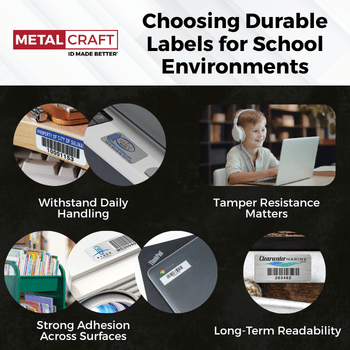
School assets experience constant movement, cleaning, transport, and student use. Durable labels help maintain long-term readability.
Tamper Resistance Matters
Tamper-resistant barcode labels and RFID tags help prevent unauthorized removal or transfer between assets.
Strong Adhesion Across Surfaces
Schools often track plastic devices, carts, metal equipment, and shared classroom tools. Labels must adhere reliably across multiple surfaces.
Long-Term Readability
Poor-quality labels can fade, peel, or fail over time, increasing relabeling costs and creating tracking errors.
Why Metalcraft for School Asset Tracking Labels
Metalcraft provides durable barcode and RFID labels built specifically for educational environments.
Schools benefit from:
- Strong adhesion and tamper-resistant options
- RFID tags optimized for laptops and shared devices
- Long-term scan reliability
- Expertise in scalable asset tracking systems
- Solutions designed for demanding school settings
Whether a district chooses barcode and RFID together or starts with one technology, durable labeling is the foundation of long-term tracking success.
How to Choose the Right Tracking Solution for Your School
Evaluate Your Asset Inventory
Start by identifying the number and type of assets your school manages.
Consider Staff Time and Audit Burden
Schools relying heavily on manual methods may benefit from greater automation.
Assess Your Budget and Growth Plans
Consider both immediate budget limitations and long-term ROI when evaluating RFID or barcode system options.
Pilot Before Full Rollout
Testing workflows and performance on a smaller scale helps schools identify the best solution before district-wide deployment.
The Best School Tracking System Depends on Your Needs
There is no one-size-fits-all answer in the RFID vs barcode debate.
For smaller schools or basic tracking needs, barcode systems offer an affordable and practical solution. For educational institutions managing large fleets of shared devices or struggling with inefficient audits, RFID technology delivers greater speed, visibility, and long-term operational value.
The best asset tracking system is the one that aligns with your school’s budget, inventory challenges, staffing resources, and long-term goals.
Find the Right School Asset Tracking Solution
Whether you are considering barcode labels, RFID tags, or a hybrid tracking system, choosing the right foundation matters.
Metalcraft helps schools improve visibility, reduce equipment loss, and streamline inventory management with durable barcode and RFID solutions designed for education environments.
- Request samples
- Discuss your school’s use case
- Start with a pilot program
About the Author: John Fitzsimmons

Mobile Phone: 641-423-9460
Office Phone: 641-423-9460
Email: [email protected]
Office: 3360 9th St SW