

Choosing the right RFID hardware is one of the most important decisions you’ll make during an RFID project—but it’s also one of the easiest places to make an expensive mistake. Many organizations begin by comparing RFID tags, RFID readers, or read range specifications without first understanding the application. In reality, knowing how to choose RFID tags starts with asking the right questions long before any hardware is purchased.
Every RFID deployment is different. The right RFID tag for tracking medical equipment may not work for returnable containers, metal tools, or warehouse pallets. Environmental conditions, mounting surfaces, read range requirements, tag placement, and business objectives all influence RFID tag performance and overall system success. Selecting RFID hardware without considering these practical factors can lead to poor read rates, unnecessary costs, implementation delays, and disappointing results.
Successful RFID projects begin by understanding the assets being tracked—not by selecting a tag from a catalog. By evaluating what you’re tracking, what it’s made of, how far it needs to be read, the environment it will experience, and the business problem you’re trying to solve, you can identify the right RFID tag, reader infrastructure, and system design for your specific application.
Whether you’re implementing RFID for asset tracking, inventory management, work-in-process tracking, access control, or regulatory compliance, these five questions will help you choose the right RFID technology, improve project performance, and maximize your return on investment from day one.
Why Planning Matters More Than Hardware
RFID Is Not One-Size-Fits-All
One of the biggest misconceptions about RFID is that there is a single “best” tag for every application. In reality, RFID technology is highly application-specific. The right RFID tag depends on the assets being tracked, the required read range, the application environment, and the business objectives of the project.
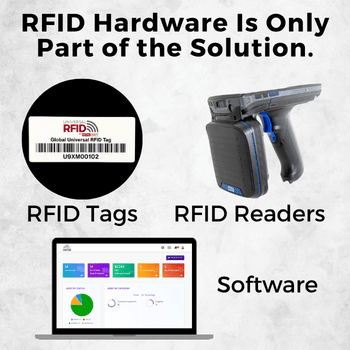
Successful RFID systems rely on multiple components working together, including RFID tags, RFID readers, antennas, printers, software, and system integration. Each component influences overall RFID performance, and selecting the wrong tag can impact everything from read accuracy to operational efficiency.
For example, passive UHF tags may be the ideal solution for inventory tracking in a warehouse, while HF RFID tags are often better suited for applications requiring greater security, such as access control. Low frequency (LF) tags perform well in environments with water or metal interference, while ultra high frequency (UHF) RFID tags offer the long read range needed for supply chain and logistics applications.
The goal isn’t simply choosing an RFID tag—it’s choosing the right RFID tag for your specific application.
Common RFID Mistakes
Many RFID deployments struggle because hardware is selected before the application is fully understood. While it may be tempting to compare specifications or choose the lowest-cost option, overlooking key application requirements often leads to poor RFID performance, additional expenses, and implementation delays. Some of the most common mistakes include:
- Choosing RFID tags based on price rather than RFID tag performance, resulting in lower read accuracy, reduced durability, and higher replacement costs over time.
- Ignoring environmental conditions such as moisture, chemical exposure, vibration, abrasion, UV exposure, or extreme temperatures that can significantly impact tag performance and longevity.
- Selecting a tag with the wrong read range requirements, causing missed reads, unwanted tag captures, or inefficient workflows.
- Overlooking how metal surfaces, liquids, or other materials influence RFID performance, which can interfere with radio waves and reduce read reliability if the proper tag is not selected.
- Failing to consider tag size, placement, and attachment method, making it difficult to achieve consistent read performance throughout the asset’s lifecycle.
- Focusing only on the RFID reader instead of evaluating the complete RFID system, including tags, antennas, software, mounting methods, and system integration.
Taking time to understand these practical factors before purchasing hardware helps reduce implementation risk, improve system performance, avoid unnecessary costs, and ensure your RFID solution delivers reliable results for your specific application.
Question #1: What Assets Are You Tracking?
The first step in learning how to choose RFID tags is understanding exactly what you’re tracking. Asset size, shape, material, value, and how the asset moves through your operation all influence tag selection.
Asset Size and Shape Matter
Different assets require different RFID tags because every application presents unique physical constraints and performance requirements. A small RFID tag that works well on an IT asset may not provide the durability, attachment method, or read performance needed for construction equipment, returnable containers, or industrial machinery. Understanding the size, shape, and intended use of an asset is one of the first steps in selecting the right RFID tag for long-term success.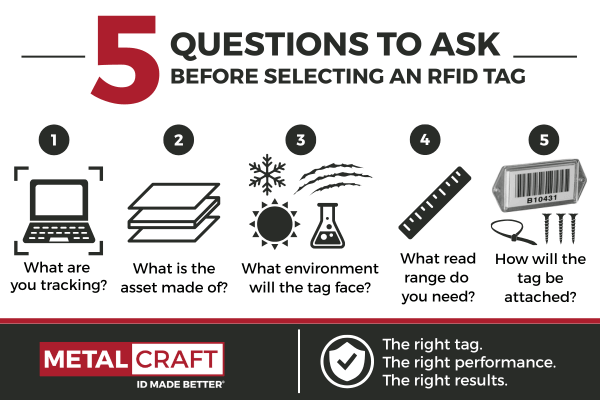
Common RFID applications include:
- Tools and power equipment that require rugged tags capable of withstanding frequent handling and harsh jobsite conditions.
- Returnable containers and totes used throughout manufacturing, distribution, and supply chain operations.
- Medical equipment and patient tracking assets where reliable identification and regulatory compliance are critical.
- IT assets and electronic devices that often require compact RFID tags and discreet installation.
- Vehicles and trailers that benefit from long-range RFID identification and automated tracking.
- Pallets and reusable packaging that move frequently through warehouses and distribution centers.
- Aircraft components that require durable identification for maintenance, inspection, and lifecycle management.
- Manufacturing work-in-process assets that support production visibility and process automation.
Tag size is another important consideration. Smaller tags are often necessary when mounting space is limited or the asset has an irregular shape, while larger tags typically provide longer read ranges and improved RFID performance. However, size should never be the only consideration. Available mounting space, required data capacity, read distance, attachment method, and environmental conditions should all be evaluated together to ensure the selected RFID tag delivers reliable performance throughout the asset’s lifecycle.
Asset Value Influences the Solution
The value of the asset often determines how much should be invested in the RFID solution. While low-cost RFID tags may be appropriate for disposable items or short-term applications, higher-value assets typically justify more durable tags designed to deliver reliable performance over many years. Matching the RFID solution to the value and expected lifecycle of the asset helps maximize return on investment while reducing maintenance and replacement costs.
When evaluating an RFID deployment, consider whether you’re tracking:
- Disposable or reusable assets, as reusable items often require more durable RFID tags that can withstand repeated handling.
- High-value equipment where accurate tracking helps prevent loss, theft, and unnecessary replacement purchases.
- Regulated products that require traceability, documentation, or compliance with industry standards.
- Mission-critical assets that support essential operations and cannot be easily replaced if misplaced or unavailable.
- Inventory requiring regulatory compliance where detailed identification and audit trails are necessary to meet reporting requirements.
Higher-value assets often benefit from rugged RFID tags engineered to withstand years of use in demanding environments, improving long-term tracking accuracy while reducing replacement costs. It’s also important to consider data requirements. Some applications require only a simple identifier to uniquely identify an asset, while others need additional memory to store maintenance histories, inspection records, ownership information, or compliance documentation. Selecting an RFID tag with the appropriate durability, data capacity, and performance characteristics helps ensure the solution continues to deliver value throughout the asset’s lifecycle.
Question #2: What Are Your Assets Made Of?
One of the most overlooked factors in RFID tag selection is the surface material. Different materials interact with radio waves differently, and selecting the wrong RFID tag for the mounting surface can significantly reduce read performance.
Metal Changes Everything
Metal is one of the most challenging materials for RFID technology because it reflects radio frequency signals and can interfere with standard RFID tags. Applying a conventional RFID label directly to metal often results in poor read performance, inconsistent reads, or complete signal loss. Without selecting the proper tag, organizations may experience reduced inventory accuracy, missed scans, and unreliable system performance.
Applications involving machinery, tools, returnable metal containers, vehicles, or industrial equipment typically require on-metal RFID tags that are specifically engineered to isolate the antenna from the metal surface. These specialized tags prevent metal from interfering with the RFID signal, improve read reliability, and deliver more consistent performance in demanding environments where standard RFID tags are unable to perform effectively.
Metal-mount RFID tags are commonly used for:
- Manufacturing equipment that requires long-term asset identification and maintenance tracking.
- Tool tracking programs where durable tags must withstand frequent handling and harsh jobsite conditions.
- Industrial asset tracking for machinery, equipment, and production assets exposed to demanding environments.
- Returnable transport items such as metal totes, racks, and containers that circulate throughout the supply chain.
- Oil and gas equipment operating in rugged environments with exposure to chemicals, moisture, and extreme temperatures.
- Utility infrastructure including transformers, electrical equipment, and field assets that require reliable long-term identification.
Choosing an on-metal RFID tag instead of a standard RFID label can dramatically improve system performance, increase read accuracy, reduce deployment issues, and help ensure reliable asset tracking throughout the life of the RFID system.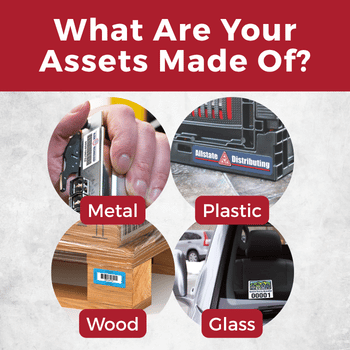
Plastic, Wood, Glass, and Liquids
Metal isn’t the only material that affects RFID performance. Every surface interacts differently with radio frequency identification technology.
Liquids absorb radio waves, which can reduce read range and impact tag performance. Glass applications may require specialized RFID tags designed to maintain reliable communication through or on glass surfaces. Composite materials, wood, plastics, and rubber each have different electrical properties that influence RFID signal propagation.
Environmental conditions also play an important role. Moisture, chemical exposure, high temperatures, vibration, abrasion, and UV exposure can all affect RFID tag durability and longevity. Corrosive chemicals may weaken tag antennas, while repeated vibration can damage the connection between the antenna and integrated circuit.
Understanding both the mounting surface and the application environment allows organizations to choose RFID tags specifically engineered for long-term performance. Matching the tag to the asset—not just the application—is one of the most important steps in building a successful RFID deployment.
Question #3: How Far Away Do You Need to Read the Tag?
Read range is one of the first specifications buyers compare when evaluating RFID tags, but longer isn’t always better. The required read range should support your workflow—not simply maximize distance. Selecting a tag with excessive range can increase unwanted reads, while a tag with insufficient range can reduce operational efficiency and system performance.
Short-Range vs. Long-Range RFID
Different RFID frequency bands are designed for different applications, making frequency selection an important part of tag selection.
- Low Frequency (LF) tags operate at 125–134 kHz and typically offer a short read range of several inches. LF tags perform well in applications with high water or metal interference, such as animal tracking and certain industrial environments.
- High Frequency (HF) RFID tags operate at 13.56 MHz and generally provide read ranges of up to three feet. HF tags are commonly used for access control, payment systems, ticketing, and applications requiring enhanced security.
- Ultra High Frequency (UHF) RFID tags operate between 860–960 MHz and are ideal for inventory tracking, supply chain operations, and logistics. UHF RFID tags can achieve read ranges of up to 20 feet while reading multiple tags simultaneously.
Active RFID tags, which include an internal battery, can achieve read ranges exceeding 750 feet, making them well suited for vehicle tracking, yard management, and other long-range applications. Semi-passive tags also contain an internal power source to improve tag performance while relying on the reader to initiate communication.
Choosing the right RFID frequency depends on your required read range, application environment, and business objectives.
Matching Read Range to Your Workflow
Rather than asking, “How far can this tag read?” ask, “How far does this tag need to read?” Selecting a read range that matches your workflow helps improve accuracy, reduce unintended reads, and optimize overall system performance. The right combination of RFID tags and readers depends on how and where assets are being identified throughout your operation.
For example:
- Handheld RFID readers are ideal for inventory counts, asset audits, locating misplaced equipment, and performing routine maintenance inspections.
- Fixed readers automatically capture tagged assets as they move through a facility, reducing manual scanning and improving operational efficiency.
- Portal readers monitor inventory moving through warehouse doors, dock doors, production lines, or distribution centers, providing automated visibility into asset movement.
- Vehicle readers support gate access, fleet management, yard automation, and automatic vehicle identification by reading tags from longer distances.
- Desktop or workstation readers are commonly used for encoding tags, verifying data, and managing individual assets in offices, healthcare facilities, or manufacturing environments.
Matching the reader infrastructure to your workflow helps maximize RFID performance while minimizing unnecessary hardware costs. Rather than purchasing the most powerful reader available, organizations should select readers that provide the required read range, coverage area, and read accuracy for their specific application. This approach improves system reliability, simplifies deployment, and ensures the RFID solution supports both current operations and future growth.
Question #4: What Environment Will the Tag Experience?
Environmental conditions are one of the biggest factors affecting RFID tag performance and durability. Even the best RFID tag can fail if it isn’t designed for the environment in which it will operate. Evaluating operating conditions early helps ensure the tag delivers reliable read performance and a long service life.
Indoor vs. Outdoor Applications
A tag used inside an office experiences very different conditions than one mounted on heavy equipment outdoors. Exposure to weather, temperature changes, and environmental contaminants can significantly affect both RFID performance and tag longevity.
Consider exposure to:
- Sunlight and UV radiation, which can degrade certain tag materials over time.
- Rain and moisture, which may impact performance if the tag is not properly sealed.
- Snow and ice, especially for outdoor equipment operating year-round.
- Humidity, which can affect both adhesives and electronic components.
- Temperature fluctuations, from freezing winters to extreme summer heat.
Applications exposed to outdoor environments often require RFID tags with high IP ratings to protect against water, dust ingress, and other environmental hazards while maintaining reliable performance.
Harsh Industrial Conditions
Industrial RFID deployments frequently expose tags to conditions that can quickly damage standard labels. Selecting a rugged RFID tag designed for these environments helps improve reliability and reduce replacement costs.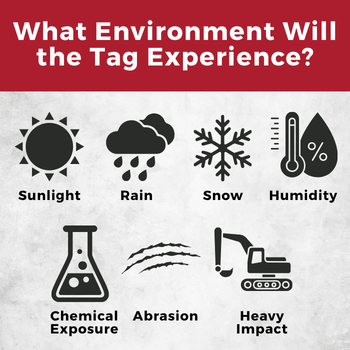
Examples include:
- Chemical exposure from cleaning agents, solvents, or industrial processes.
- Abrasion caused by repeated handling or contact with equipment.
- Pressure washing during routine cleaning and maintenance.
- High temperatures found in manufacturing, coating, or processing operations.
- Freezing temperatures encountered in cold storage or outdoor applications.
- Heavy impact from tools, machinery, or material handling equipment.
- Oil and grease common in manufacturing and maintenance environments.
- Dirt and debris that can accumulate on assets in industrial settings.
Environmental conditions affect both RFID tag performance and longevity. Moisture can reduce read reliability, corrosive chemicals may weaken antennas, vibration can damage the connection between the antenna and integrated circuit, and excessive heat during manufacturing or operation may permanently damage a tag. Rugged encapsulated RFID tags specifically engineered for harsh environments provide greater durability, longer service life, and more consistent performance in demanding applications.
Attachment Method Matters Too
The best RFID tag won’t perform well if it doesn’t stay attached. Selecting the proper attachment method is just as important as choosing the right RFID tag.
RFID tags must be secured using an attachment method appropriate for the asset and environment, including:
- Adhesive labels for clean, smooth, and flat surfaces.
- Rivets for permanent attachment to equipment and metal assets.
- Screws for applications requiring secure mechanical fastening.
- Welding for specialized industrial and heavy-duty applications.
- Zip ties for cables, pipes, containers, and other assets where drilling or adhesives aren’t practical.
Adhesive RFID labels work well on clean, flat surfaces, while mechanical fasteners are often preferred for industrial equipment exposed to vibration, impact, frequent handling, or harsh environmental conditions. Choosing the right attachment method helps ensure the tag remains securely in place and continues delivering reliable read performance throughout the asset’s lifecycle.
Question #5: What Business Problem Are You Trying to Solve?
Technology alone doesn’t create value. Successful RFID deployments begin with clearly defining the business problem the system is intended to solve. Rather than focusing first on tags, readers, or software, organizations should identify the operational challenge they want to improve. This approach ensures the RFID solution is designed to deliver measurable results and long-term value.
Organizations use RFID technology to improve:
Inventory Visibility
Automated inventory tracking provides real-time visibility into asset availability, locations, and movement while reducing manual inventory counts. This allows organizations to make faster, more informed decisions based on accurate inventory data, improve inventory planning, and reduce the time employees spend searching for assets.
Asset Tracking
RFID systems simplify tracking assets throughout their lifecycle, improving accountability, reducing losses, and making it easier to locate equipment when it’s needed. Greater asset visibility also helps organizations increase equipment utilization and reduce unnecessary replacement purchases.
Tool Accountability
Manufacturers, contractors, and maintenance teams use RFID to ensure tools are returned, available, and properly maintained. This reduces downtime caused by lost or misplaced tools, improves workforce productivity, and helps ensure critical equipment is available when needed.
Work-in-Process Tracking
Manufacturing facilities monitor products moving through production to improve throughput, identify bottlenecks, automate data collection, and gain greater visibility into manufacturing operations. Real-time production data also supports continuous process improvement and more informed operational decisions.
Vehicle Identification
Long-range RFID supports automated gate access, fleet management, yard operations, and vehicle identification, helping organizations improve traffic flow, automate vehicle verification, and reduce manual inspections at entry and exit points.
Regulatory Compliance
Many industries use RFID to satisfy compliance requirements by maintaining accurate asset records, inspection histories, maintenance documentation, and end-to-end traceability throughout the asset lifecycle. Automated data collection also helps simplify audits and improve reporting accuracy.
Access Control
HF RFID tags and secure RFID credentials help organizations manage employee and visitor access while improving security, accountability, and facility management. Automated access records also provide valuable audit trails for investigations and compliance reporting.
Defining the desired business outcome before selecting hardware helps ensure every component of the RFID system—from tags and readers to software and system integration—supports measurable operational improvements. By starting with the business objective instead of the technology, organizations can build RFID solutions that improve efficiency, reduce costs, and deliver a stronger return on investment.
RFID Hardware Is Only Part of the Solution
Why Pilot Testing Is Worth the Investment
Why Application Engineering Matters
About the Author: John Fitzsimmons

Mobile Phone: 641-423-9460
Office Phone: 641-423-9460
Email: [email protected]
Office: 3360 9th St SW