
What is UID? (Unique Item Identification Explained)
Understanding what is UID is essential for organizations that rely on accurate inventory management, compliance, and lifecycle tracking. UID, or Unique Item Identification, is a system used to assign a unique identifier—often a numeric or alphanumeric string—to an individual item, asset, or piece of equipment.
A unique identifier UID acts as an unambiguous identifier that allows organizations to uniquely identify and track individual assets across their entire product lifecycle. In many cases, this identifier is machine readable, enabling integration with technologies like QR codes, barcodes, and even radio frequency identification (RFID) systems.
Originally developed for managing government owned and military property, UID systems are now used across various industries to improve data integrity, data quality, and operational efficiency.
What Does UID Mean?
UID stands for Unique Item Identification, a standardized method for assigning a globally unique identifier to a discrete entity—whether that’s a tool, piece of equipment, or a single hardware article.
Each UID is:
- Uniquely assigned to one individual item
- Designed to remain with that asset throughout its useful life
- Structured as a numeric or alphanumeric string that exists within a large number space
This ensures that even among millions of assets, each one can be distinctly identified. Similar to how a vehicle identification number (VIN) uniquely identifies a car or a MAC address identifies a network device, a UID ensures that no two assets share the same identity within a given system.
In broader terms, UID is about establishing globally unique identifiers that eliminate confusion between unlike items or even unlike entities across complex databases.
Why Is UID Important?
Understanding what is a UID goes beyond definition—it’s about recognizing its impact on operations.
Without a globally unique identifier, organizations risk:
- Duplicate or conflicting records
- Loss of visibility across the supply chain
- Poor data quality and reporting issues
A UID system ensures accurate tracking of individual pieces of equipment and eliminates duplicate reports by assigning each asset a unique item identifier.
Key Benefits of UID Systems
Organizations that implement UID systems gain:
- Improved inventory management of individual assets
- Enhanced data integrity across databases
- Better lifecycle visibility for the entire product
- Stronger compliance with government and industry standards
- Reduced operational cost through accurate tracking
For example, in environments managing military property or regulated assets, UID ensures that each single unit can be tracked from acquisition to disposal without ambiguity.
UID vs. IUID: What’s the Difference?
While UID refers to the general concept of unique identification, IUID (Item Unique Identification) is a specific implementation used by the U.S. Department of Defense (DoD).
Key Differences
- UID: General concept used across industries
- IUID: DoD-specific system for tracking government owned and dod serially managed assets
The IUID system requires that every qualifying asset be assigned a unique identifier UID and registered in the IUID registry, ensuring complete visibility and accountability.
This distinction is important when considering compliance requirements for contractors working with defense or federal agencies.
UID Label Requirements and Structure
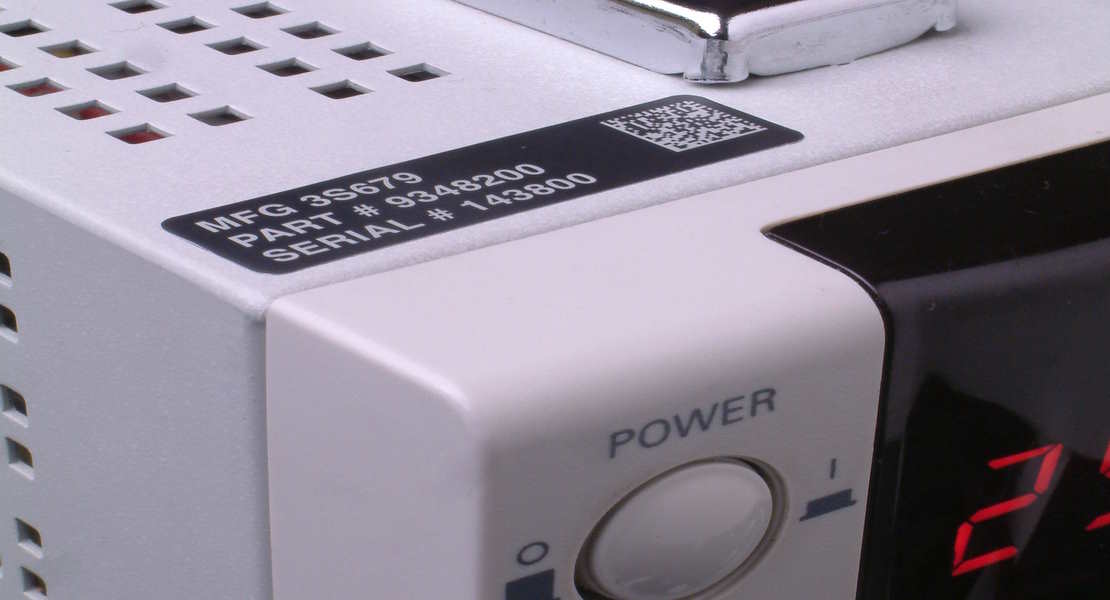
UID labels—also known as UID tags or IUID tags—are designed to include machine readable data that can be scanned and interpreted by systems.
Each UID label contains specific data elements, which may include:
- Enterprise identifier (such as an issuing agency code)
- Serial number
- Original part number
- Additional UII data set information
These data elements are combined to create a unique item identifier that is permanently linked to a single unit formed from its constituent parts.
UID Construct Formats
UID labels follow two primary formats:
- Construct 1: Enterprise identifier + serial number
- Construct 2: Enterprise identifier + original part number + serial number
Both formats ensure that each UID is globally unique and traceable within the IUID registry.
Who Uses UID Labels?
UID systems are widely used across various industries, especially where accurate tracking and compliance are critical.
Defense and Government
The DoD uses UID to manage military property, ensuring that each asset is properly accounted for in receiving reports, material inspection, and lifecycle tracking.
Healthcare Providers
Healthcare providers use UID systems to track medical devices, medical supplies, and sensitive medical information. This helps ensure patient privacy, safety, and regulatory compliance.
Supply Chain and Logistics
In the supply chain, UID enables real-time tracking of goods, helping organizations:
- Identify embedded items within shipments
- Monitor asset movement
- Improve inventory accuracy
These applications demonstrate how UID supports visibility and accountability across complex systems.
Supporting Asset and Inventory Management
A UID system plays a critical role in modern inventory management and asset management strategies.
By assigning a unique identifier UID to each asset, organizations can:
- Identify and track individual assets across locations
- Maintain accurate records in a centralized database
- Eliminate duplicate entries and duplicate reports
- Monitor maintenance schedules and lifecycle events
Each UID is stored in a specific column within a database, linking all relevant data to that individual item.
This structured approach ensures that organizations can efficiently manage inventory, improve accountability, and optimize operations.
Data Integrity and UID Systems
One of the most important benefits of UID is improved data integrity.
Because each UID is:
- Uniquely assigned
- Stored within a defined number space
- Managed by a central authority
It prevents duplication and ensures consistency across systems.
Examples of similar identifiers include:
- MAC address for network devices
- Social Security Number for individuals
- Vehicle identification number for automobiles
These identifiers function similarly to UID by providing a globally unique identifier that links data to a specific entity.
Maintaining high data quality ensures reliable reporting, better decision-making, and fewer operational errors.
Real-World Applications of UID Codes
UID systems are used in many practical scenarios to uniquely identify and track assets.
Defense & Government
UID labels ensure compliance, support lifecycle tracking, and help manage government owned assets.
Healthcare
UID systems help track medical devices, protect patient privacy, and ensure accurate medical information management.
Logistics & Supply Chain
UID enables tracking of shipments, improving efficiency and reducing errors across the supply chain.
Technology and Systems
UIDs are used to track individual users, devices, and assets within a system, ensuring secure access and accurate data management.
UID for User Identification
UID is not limited to physical assets—it is also used to identify individual users.
When users register on a platform, they are assigned a user ID or personal code that acts as a unique identifier.
This allows systems to:
- Track user activity
- Secure access to sensitive data
- Ensure that the same UID is not assigned to multiple users
For example, a login system may assign a user id that uniquely identifies a person within the platform, linking all actions and data to that individual.
Challenges with UID Implementation
Despite its advantages, implementing UID systems comes with challenges.
Common Challenges
- Ensuring identifiers remain globally unique across multiple systems
- Avoiding duplication of the same UID
- Managing large datasets within a defined number space
- Integrating UID across legacy systems
To overcome these challenges, organizations must rely on a central authority to assign identifiers and maintain consistency across databases.
UID and Digital Security
UID systems also enhance security by ensuring each asset or user has a distinct identity.
This helps prevent:
- Counterfeit products entering the supply chain
- Unauthorized access by unregistered users
- Data conflicts within critical systems
By using a machine readable UID, organizations can quickly verify authenticity and maintain secure operations.
Conclusion
So, what is UID? It is more than just a number—it is a unique identifier UID that enables organizations to uniquely identify, track, and manage individual assets and users across their lifecycle.
By assigning a globally unique identifier, UID systems improve:
- Inventory management
- Data integrity and data quality
- Compliance with regulatory standards
- Visibility across operations
From military property and medical devices to modern supply chain systems, UID plays a critical role in ensuring accurate tracking and accountability.
As businesses continue to rely on data-driven decision-making, implementing a UID system is essential for maintaining control, reducing costs, and improving operational efficiency.
About the Author: Kathleen Phillips

Mobile Phone: 641-423-9460
Office Phone: 641-423-9460
Email: [email protected]
Office: 3360 9th St SW, Mason City, IA 50401