
Industrial barcode labels are a critical component of modern asset tracking, inventory management, and compliance systems. From tracking equipment in manufacturing facilities to managing pallets in a warehouse, barcode labels enable organizations to identify, monitor, and control assets with speed and accuracy. However, not all labels are created equal—standard paper barcode stickers often fail when exposed to industrial environments.
Heat, chemicals, abrasion, and outdoor exposure can quickly degrade low-quality labels, leading to scanning errors, lost data, and disruptions across operations. That’s why selecting the right barcode label requires careful consideration of materials, print methods, and long-term durability.
High-performance industrial barcode labels are engineered to withstand the harshest conditions while maintaining reliable performance over time. Metalcraft specializes in producing durable, custom barcode labels designed for industrial use—helping organizations improve accuracy, reduce downtime, and maintain visibility across their supply chain.
What Are Industrial Barcode Labels?
Definition and Core Function
Industrial barcode labels are specialized labels designed for use in demanding environments where durability is essential. These labels feature a barcode or QR code that can be scanned to identify assets, track inventory, and manage data across systems.
Used across industries, barcode labels play a central role in asset tracking, enabling teams to quickly scan equipment, components, or inventory labels using handheld devices. This process improves efficiency and reduces manual data entry errors.
Key Differences from Standard Barcode Labels
Unlike standard labels made from paper or low-grade plastic, industrial barcode labels are engineered with durable materials such as polyester, polypropylene, vinyl, or metal. These materials are often coated to resist abrasion, moisture, and chemicals.
Industrial labels also feature stronger adhesives, ensuring they remain secure on surfaces like metal equipment, curved surfaces, or textur
ed plastic. In addition, metal industrial asset labels may include holes for fastening with rivets, providing extra security in demanding applications. Their enhanced durability makes them suitable for long-term use in industrial environments where standard labels would fail.
Common Industrial Use Cases
Industrial barcode labels are widely used across many sectors. In manufacturing, they are essential for tracking equipment, parts, and production components. In warehouse operations, they help manage inventory and streamline shipping processes.
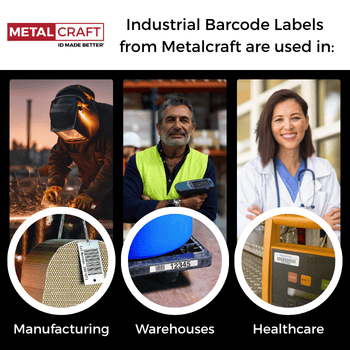
Utilities and field service teams rely on durable tags and labels for asset identification in outdoor conditions. From healthcare equipment tracking to laboratory sample labeling, industrial barcode labels support compliance and accuracy across diverse applications.
Why Durability Matters in Industrial Barcode Labels
Exposure to Harsh Conditions
Industrial environments expose labels to extreme temperatures, moisture, UV radiation, and chemical resistance requirements. Cleaning processes, solvents, and harsh chemicals can quickly degrade low-quality labels.
Labels designed for outdoor conditions must withstand prolonged sun exposure, while those used in industrial facilities must endure temperature fluctuations and exposure to oils or cleaning agents. For long-term durability, our foil and metal barcode tags are guaranteed to last 20+ years outdoors with the Intensified option—or they will be replaced at no cost—while our polyester labels can last up to 10 years outdoors with the ColorFast option.
High Wear and Tear Environments
In many operations, labels are frequently handled, scanned, or exposed to friction from equipment and movement. Barcode labels on pallets, tools, or machinery may be subject to constant abrasion.
Durable materials ensure that barcodes remain readable even after repeated use, maintaining scan accuracy and preventing disruptions in the tracking process.
Long-Term Asset Tracking Needs
For long-term asset tracking, labels must last for years—not months. Replacing labels frequently increases labor costs and introduces opportunities for errors.
Investing in high-quality industrial barcode labels reduces relabeling efforts, supports compliance, and ensures continuous visibility of assets throughout their lifecycle.
Types of Industrial Barcode Labels
Polyester Barcode Labels
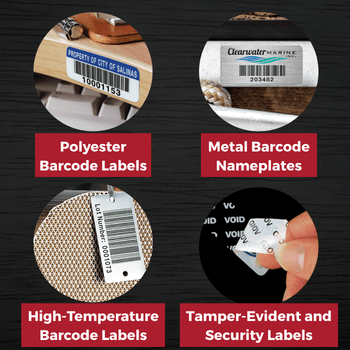
Polyester barcode labels are one of the most cost-effective and widely used options. Products like Metalcraft’s Craftmark Polyester Barcode Labels and Premium Polyester Barcode Labels offer strong durability for indoor environments and moderate industrial conditions.
These labels are resistant to moisture and moderate to extreme chemicals, making them suitable for inventory labels, equipment tracking, and general operations.
Metal Barcode Nameplates
Metal barcode labels provide maximum durability and are designed for the harshest conditions. These labels can withstand extreme temperatures, heavy abrasion, and exposure to chemicals.
They are ideal for long-term asset tracking in manufacturing, utilities, and other demanding industries where durability is critical.
High-Temperature Barcode Labels
High-temperature labels are engineered for use in manufacturing processes that involve heat exposure. These labels maintain integrity during production cycles, ensuring that barcodes remain scannable.
They are commonly used for tracking components through production lines or labeling equipment exposed to elevated temperatures.
Tamper-Evident and Security Labels
Tamper-evident barcode labels provide an added layer of security by showing visible signs if removed or altered. These labels are essential for protecting high-value assets and ensuring compliance.
They are widely used in industries where secure labeling is critical, such as healthcare, electronics, and logistics.
Choosing the Right Material for Industrial Barcode Labels
Environmental Considerations
Selecting the right barcode label starts with understanding the environment. Indoor applications may only require polyester or polypropylene labels, while outdoor exposure demands UV-resistant materials like vinyl or metal.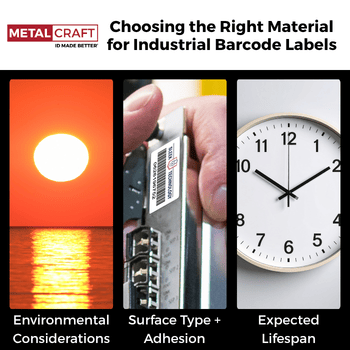
For environments with chemical exposure or cleaning processes, chemical resistant labels are essential to maintain durability and readability.
Surface Type and Adhesion
Different surfaces require different adhesive solutions. Smooth metal surfaces may work well with permanent adhesives, while textured or curved surfaces may require aggressive adhesives for a secure bond.
Choosing the right adhesive ensures that labels stay attached, even in challenging conditions.
Expected Lifespan
The durability of a barcode label should match the asset’s lifecycle. For short-term applications like shipping labels, lower-cost materials may be sufficient.
For long-term asset tracking, durable materials such as metal or coated polyester provide reliable performance and reduce replacement costs.
Printing Methods for Industrial Barcode Labels
Thermal Transfer Printing
Thermal transfer printing is a common method for producing industrial barcode labels, delivering durable, high-quality images that resist fading and smudging. It’s often used when on-demand printing is required and can meet basic durability needs in controlled environments.
Direct Thermal Printing
Direct thermal printing is a lower-cost option typically used for short-term applications like shipping labels. Because the image is heat-sensitive, these labels are prone to fading over time and are not suitable for long-term industrial use.
Pre-Printed vs. Variable Data Labels
For most industrial applications, pre-printed barcode labels offer a clear advantage in durability, consistency, and scan reliability. Because they are manufactured under controlled conditions using specialized materials and inks, pre-printed labels deliver superior print quality that holds up against abrasion, chemicals, UV exposure, and harsh environments. This results in more reliable scanning and fewer errors over the life of the asset.
Pre-printed labels are ideal for fixed data such as asset tags, equipment IDs, and branding, where long-term performance is critical. Variable data labels, while flexible for adding serial numbers or unique identifiers, are typically printed on-site and may not achieve the same level of durability or consistency as professionally produced labels.
Ensuring Scan Accuracy
Scan accuracy starts with barcode quality. Factors such as contrast, resolution, spacing, and proper sizing all impact readability. Pre-printed barcode labels are engineered to meet strict scanning standards, ensuring consistent, high-performance scans. This reduces downtime, minimizes misreads, and improves overall operational efficiency—especially in demanding industrial environments where reliability is essential.
Best Practices for Industrial Barcode Labeling
Use Labels Designed for Your Environment
Avoid using general-purpose labels in industrial environments. Instead, select materials engineered for your specific conditions to ensure durability and performance.
Standardize Label Design
Consistent label design across operations improves efficiency and reduces confusion. Standardized formats help teams quickly identify assets and maintain accurate data.
Prioritize Scanability
Ensure barcodes are properly sized and placed for easy scanning. Labels should be positioned where they can be accessed without obstruction.
Test Labels Before Full Deployment
Before rolling out labels across your facility, test them in real-world conditions. This helps validate durability, adhesion, and scan performance.
Plan for Long-Term Performance
Investing in durable barcode labels reduces replacement frequency and ensures reliable performance over time. This supports long-term asset tracking and improves overall operations.
Common Mistakes to Avoid
Using Low-Quality Materials
Low-quality materials such as paper labels can quickly fail in industrial environments, leading to fading, peeling, and loss of data.
Choosing the Wrong Adhesive
Improper adhesion can cause labels to fall off, resulting in lost tracking and inefficiencies.
Ignoring Environmental Exposure
Failing to account for environmental factors like chemicals, outdoor conditions, or extreme temperatures can lead to premature label failure.
Poor Barcode Print Quality
Low-quality printing reduces scan accuracy, leading to delays, errors, and frustration for teams relying on barcode systems.
Why Metalcraft for Industrial Barcode Labels
Metalcraft delivers industrial barcode labels engineered for durability and performance in demanding environments. With a wide range of materials—including polyester, vinyl, and metal—Metalcraft provides solutions tailored to specific applications.
Their custom barcode labels are designed to withstand harsh conditions, ensuring reliable performance across manufacturing, utilities, healthcare, and government sectors. From pre printed designs to variable data labels, Metalcraft supports scalable production for organizations of all sizes.
With proven expertise in barcode labeling, Metalcraft helps organizations improve accuracy, maintain compliance, and optimize operations with high-quality labeling solutions.
Conclusion: Industrial Barcode Labels Must Be Built for Real-World Conditions
Industrial barcode labels are not interchangeable with standard labels. In demanding environments, durability, material selection, and print quality directly impact operational efficiency and asset visibility.
Organizations that invest in high-performance barcode labels benefit from improved scan accuracy, reduced downtime, and fewer labeling failures. By choosing the right materials and following best practices, businesses can enhance their tracking systems and avoid costly relabeling—ensuring long-term success in even the most challenging industrial environments.
About the Author: John Fitzsimmons

Mobile Phone: 641-423-9460
Office Phone: 641-423-9460
Email: [email protected]
Office: 3360 9th St SW