
How to Track Hospital Equipment: A Guide to Asset Tracking in Healthcare
In today’s healthcare environment, the need for precise, real-time visibility into medical equipment is more critical than ever. From lifesaving devices to routine diagnostic tools, knowing where equipment is, its condition, and how it’s being used can directly impact patient care, regulatory compliance, and operational efficiency. Asset tracking provides the solution—and when implemented correctly, it can transform how healthcare facilities manage their resources.
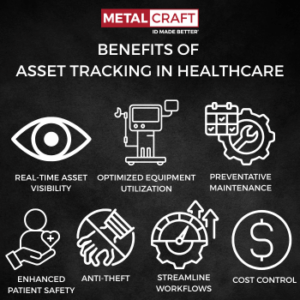
Benefits of Asset Tracking in Healthcare
Implementing a robust asset tracking system in healthcare environments offers transformative benefits that span clinical operations, compliance, cost management, and patient care. Whether you’re managing life-saving equipment or everyday tools, real-time visibility and control can significantly improve how your facility functions. Here’s how asset tracking enhances healthcare delivery:
✅ Real-Time Asset Visibility
Know exactly where your critical equipment is at any given moment. Asset tracking—especially with RFID—eliminates the time wasted searching for devices like wheelchairs, IV pumps, or defibrillators, ensuring they’re available precisely when and where they’re needed.
✅ Optimized Equipment Utilization
Gain insights into how assets are used across your facility. By identifying underutilized or idle equipment, healthcare providers can redeploy resources more effectively, reduce unnecessary purchases, and increase return on investment.
✅ Preventative Maintenance & Regulatory Compliance
Automated tracking allows you to schedule preventative maintenance based on usage or time intervals, helping avoid unexpected breakdowns. It also maintains accurate service logs to meet stringent regulatory standards, supporting audits, inspections, and accreditation processes.
✅ Enhanced Patient Safety
Patient care begins with having reliable, safe equipment. Asset tracking ensures machines are properly calibrated, sterilized, and maintained—helping reduce the risk of equipment-related errors, cross-contamination, or avoidable delays in treatment.
✅ Theft Deterrence & Anti-Counterfeiting
With high-value assets constantly on the move, tracking technologies deter theft and loss. Tamper-evident or destructible asset tags also help healthcare providers verify the authenticity of medical supplies—critical in fighting counterfeit products.
✅ Streamlined Operational Workflows
Automated asset check-in/check-out, real-time audit capabilities, and integrated system alerts dramatically reduce manual tracking tasks. This lightens the administrative load on staff, improves workflow efficiency, and allows clinicians to focus more on patient care.
✅ Cost Control and Financial Efficiency
By eliminating unnecessary rentals, preventing asset duplication, and reducing downtime, asset tracking helps healthcare facilities control costs. More accurate asset data also supports better financial planning, budgeting, and capital equipment forecasting.
Choosing the Right Tracking Technology: Barcode vs. RFID
Selecting the appropriate technology for tracking hospital equipment is a foundational step in building an effective asset management system. In healthcare settings—where precision, speed, and reliability are paramount—barcode and RFID (Radio Frequency Identification) technologies are the two most widely adopted solutions. Each offers distinct advantages depending on the unique needs of your facility, the type of assets you’re tracking, and the environment in which they operate.
Barcode Systems: Reliable, Cost-Effective, and Flexible
Barcode technology has long been a go-to solution for organizations looking to improve asset visibility without a large upfront investment. It remains a highly effective option in healthcare for several reasons:
-
Affordability and Simplicity – Barcode systems are relatively inexpensive to deploy. Barcode printers and scanners are widely available and easy to use, making them ideal for facilities operating with tight budgets or limited IT resources.
-
Quick Implementation – Barcodes can be generated and applied to assets quickly, enabling faster deployment compared to more complex systems.
-
Durability and Customization – With the right materials, barcode labels can be designed to withstand harsh conditions such as sterilization processes (e.g., autoclaves), exposure to chemicals, and physical wear and tear.
-
Broad Compatibility – Barcodes can be read on nearly any surface type, including plastic, metal, and curved surfaces, without the need for specialized equipment or environmental conditions.
While barcode systems require line-of-sight scanning and manual interaction, they remain an excellent solution for hospitals that need a simple, reliable, and cost-conscious way to track equipment and inventory.
RFID Systems: Real-Time Visibility and Seamless Automation
RFID systems take asset tracking to a more advanced level by automating many of the manual steps involved in barcode scanning. They’re particularly valuable in large or fast-paced hospital environments where real-time location tracking and workflow efficiency are critical.
-
No Line-of-Sight Required – RFID tags can be read through walls, packaging, or other obstacles, making it easier and faster to scan multiple items at once without physically seeing or handling each one.
-
Real-Time Asset Visibility – RFID provides continuous updates on asset location and movement, ensuring critical medical equipment is always accounted for and available when needed.
-
Faster Inventory and Audits – With RFID, entire rooms of assets can be scanned within seconds, dramatically reducing time spent on audits and improving inventory accuracy.
-
Improved Workflow Efficiency – By integrating RFID with hospital systems like EHR (Electronic Health Records) or CMMS (Computerized Maintenance Management Systems), hospitals can automate equipment check-in/out, maintenance alerts, and utilization tracking.
-
Enhanced Patient Safety and Compliance – RFID ensures the right equipment is used at the right time and helps monitor sanitation and calibration history, which is critical for regulatory compliance and patient safety.
While RFID systems require a larger upfront investment and more sophisticated infrastructure, the long-term benefits in time savings, asset utilization, and operational transparency often justify the cost—especially for medium to large healthcare organizations.
Plastic or Metal Tags: Which is Better for Medical Equipment?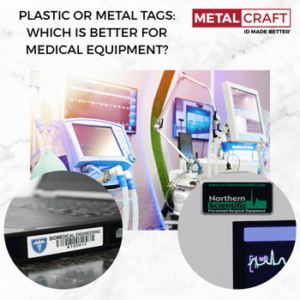
Choosing between plastic and metal asset tags for medical equipment is an important step in ensuring your tracking system delivers long-term performance and reliability. While both materials serve the same fundamental purpose—identifying and tracking assets—their durability, resistance to environmental factors, and adaptability vary widely depending on the application.
The best choice for your facility comes down to the conditions the tags will be exposed to and the demands of your specific use case. Here are some important questions to consider when deciding between plastic and metal tags:
-
Will the tags be exposed to harsh chemicals or high temperatures?
For example, equipment undergoing sterilization in autoclaves may reach temperatures of 270°F (132°C) or more. Many plastics can withstand moderate heat, but repeated high-temperature exposure may cause warping, fading, or adhesive failure. In contrast, anodized aluminum or stainless steel tags are specifically designed to withstand high-heat and caustic environments without degrading over time. -
What surface will the tags be applied to?
If the asset has a curved or textured surface—such as IV poles, tubing, or cylindrical equipment—plastic tags often offer greater flexibility and can adhere more reliably. For flat, metallic surfaces like surgical trays or diagnostic machines, metal tags are an ideal solution due to their rigid structure and ability to maintain readability despite abrasions or impacts. -
Do you need specialty features like tamper-evidence, destructibility, or ultra-durability?
Plastic tags are available in tamper-evident or destructible formats, which are particularly useful for deterring theft or ensuring asset integrity. If a tag is removed or tampered with, it visibly self-destructs or leaves behind a “VOID” pattern—alerting administrators that the asset has been compromised. Metal tags, on the other hand, are more suited for long-term durability and resistance to physical abuse, making them ideal for assets that are frequently moved, cleaned, or exposed to mechanical friction. -
What’s the expected lifespan of the tagged asset?
For disposable or short-life-cycle items, a lower-cost plastic tag may be appropriate. But for capital assets that are expected to last years—like imaging equipment or surgical carts—metal tags provide greater return on investment due to their longevity.
What Types of Hospital Equipment Should You Track?
Technically, you can track any item within a healthcare facility, but in practice, it’s important to focus on assets that deliver value when monitored. Tracking everything can lead to data overload and unnecessary complexity, so it’s essential to be strategic in your approach.
Start by working through Step 3: Perform a Needs Analysis and Step 5: Make Your List from our Ultimate Guide to Asset Tracking. These steps help clarify your objectives by prompting critical questions such as: What assets are vital to daily operations? What system—if any—do you currently use? What inefficiencies or issues are you trying to resolve? And what are your compliance, audit, or reporting obligations?
In most healthcare environments, typical trackable items include life-saving equipment like ventilators and defibrillators, high-value electronics such as monitors and infusion pumps, mobile assets like wheelchairs and hospital beds, IT hardware including laptops and barcode scanners, and essential sterilization kits or surgical tools. These assets are often subject to movement, wear, maintenance, and regulatory oversight—making them ideal candidates for tracking.
To narrow down your list, apply a minimum dollar value or risk threshold—focusing on items that are expensive, frequently moved, vulnerable to loss, or critical to patient care and compliance. This approach ensures you’re maximizing the value of your tracking system without overwhelming it.
How Much Does It Cost to Set Up a Hospital Asset Tracking System?
The cost of implementing a hospital asset tracking system can vary widely based on several key factors. These include the scope of tracking—such as the number and type of assets you plan to monitor—the technology you choose (barcode, RFID, or a hybrid of both), as well as the hardware and software requirements needed to support the system. Additionally, the scale of implementation—whether you’re deploying the system in a single department or across an entire hospital network—will significantly influence the overall cost. To better understand your investment and identify the most cost-effective solution for your facility, we recommend using our Ultimate Guide to Asset Tracking and the Asset Tracking Checklist. These resources are designed to help you plan strategically and make informed decisions that align with your goals and budget.
How Metalcraft Can Help

Whether you’re building an asset tracking system from the ground up or enhancing an existing solution, Metalcraft is here to support you every step of the way. We offer expert consultation to help you qualify your application, identify your goals, and choose the most effective tracking method—whether that’s barcode, RFID, or a combination of both. Our custom tags are specifically designed for healthcare environments, ensuring durability, compliance, and long-term performance. To help you plan and implement your system, we provide valuable resources including the Ultimate Guide to Asset Tracking, Asset Tracking Checklist, and our Asset Tracking ROI Calculator. And when you need personalized assistance, our knowledgeable ID specialists are just a phone call or email away, ready to guide you toward a smarter, more efficient tracking solution.
📞 800-437-5283
📧 metalcraft@idplate.com
About the Author: Kathleen Phillips

Mobile Phone: 641-423-9460
Office Phone: 641-423-9460
Email: [email protected]
Office: 3360 9th St SW, Mason City, IA 50401