
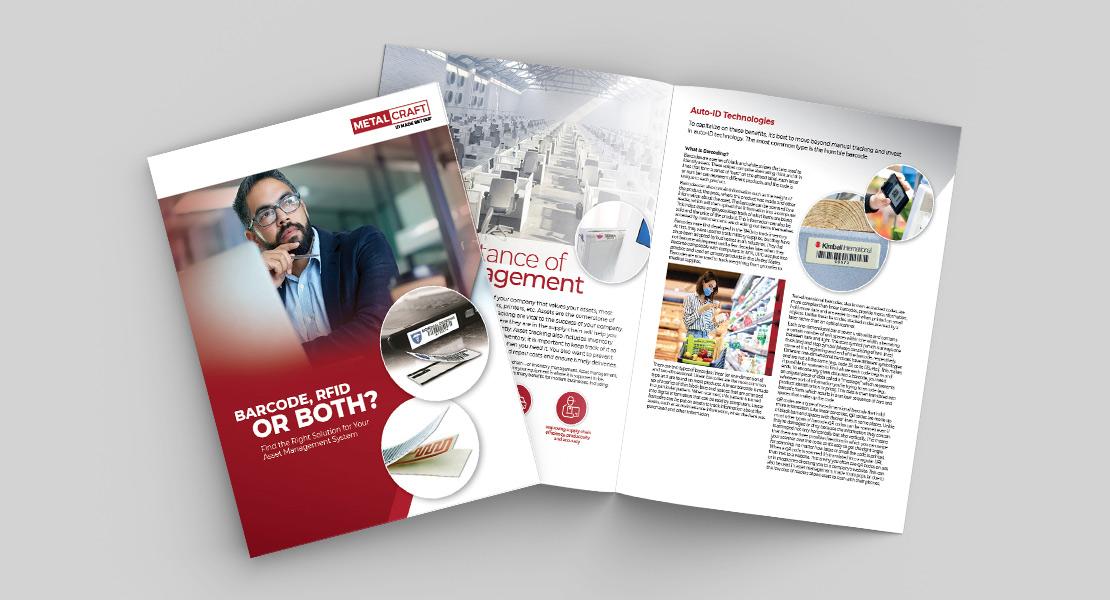
RFID or Barcode? Choosing the Right Technology for Your Business
RFID or Barcode? Barcode or RFID? We’ve heard this question frequently since we started working with RFID technology in the early 2000s. There’s no one-size-fits-all answer, and as an impartial provider offering both technologies, we help businesses determine which solution best suits their needs in the RFID vs barcode debate.
RFID vs Barcode – Defining Your Objective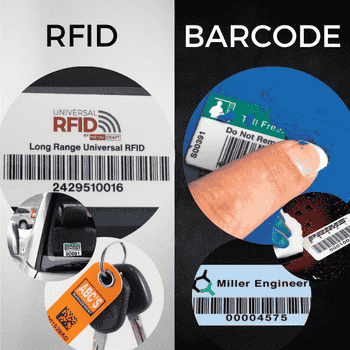
When selecting a tracking technology, it’s important to identify your primary objective. While some may view RFID and barcode systems as competitors, they serve different purposes and offer unique advantages. Understanding your tracking goals is key to determining which solution best meets your needs.
For inventory management, both technologies can be effective but excel in different ways. RFID is ideal for fast, high-volume tracking since multiple items can be scanned simultaneously without a direct line of sight. This makes it perfect for warehouses and automated asset tracking.
In contrast, barcode systems offer a cost-effective solution for precise, item-level tracking. Barcodes require a line of sight but are simple to implement, making them ideal for smaller-scale inventory tasks.
Choosing between RFID and barcodes depends on factors like budget, volume, and automation needs. By clearly defining your objectives and assessing the strengths of each technology, businesses can implement a solution that maximizes efficiency and improves tracking accuracy, reduces errors, and enhances overall operational visibility.
Understanding Assets and Identification
When we talk about tracking assets, we’re referring to anything a company owns that holds value. Assets may be classified as either fixed or mobile:
- Fixed assets are stationary, like machinery or office furniture.
- Mobile assets move between locations, like laptops, containers, or pallets.
Both types of assets benefit from either RFID tags or barcode labels, depending on the tracking environment, operational needs, and desired data insights.
Consider the Surface and Environment

When choosing between RFID tags and barcode labels for asset tracking, it’s essential to consider surface materials and environmental conditions, as these factors can significantly impact performance and reliability.
Barcode labels are highly versatile and can adhere to curved, uneven, or textured surfaces without compromising scan performance. This makes them ideal for tracking items with irregular shapes or challenging surfaces. Additionally, barcode labels are unaffected by metal or liquid, giving them an advantage in certain environments.
RFID tags, however, require careful selection based on surface material. Metal surfaces can reflect radio waves, interfering with the RFID reader’s ability to detect the tag. Similarly, liquids can absorb radio waves, reducing read range and accuracy. Specialized RFID tags designed for metal surfaces or liquid-filled containers are available to overcome these challenges.
Environmental factors also play a critical role in tag durability. Both barcode labels and RFID tags are available in specialized designs to withstand extreme temperatures, chemicals, and outdoor conditions. While these durable options may involve additional costs, they are essential for demanding industries like manufacturing and oil and gas.
By assessing surface materials, environmental conditions, and tracking goals, businesses can select the right technology to ensure optimal performance and longevity.
Benefits of RFID Technology and Barcode Systems
Both RFID technology and barcode systems offer unique advantages:
Benefits of RFID Technology:
| Benefits of RFID Technology | Benefits of Barcode Technology |
|---|---|
| Multiple items can be scanned simultaneously, improving efficiency in inventory management and warehouse operations. | Faster implementation with minimal infrastructure investment. |
| Unlike barcode readers, RFID systems don’t require a line of sight, making them ideal for densely packed storage or concealed assets. | Simple, cost-effective systems that are widely adopted and accessible to small businesses. |
| RFID data can provide more data about each tagged item, such as maintenance history or ownership records. | Efficient for tracking individual items, especially in retail environments using universal product code (UPC) standards. |
| Longer read range capabilities make RFID ideal for tracking high value items across larger areas. |
When to Use RFID Tags vs Barcode Labels
The Benefits of RFID for Asset Tracking
RFID tags provide fast, automated tracking ideal for industries like manufacturing, healthcare, and retail. They excel at reading multiple items simultaneously without a direct line of sight, enabling quick and efficient inventory counts.
Warehouses can scan hundreds of RFID-tagged items in seconds, improving accuracy and productivity. Beyond identification, RFID tags can store detailed data such as maintenance records or expiration dates, offering valuable insights that enhance decision-making and operational efficiency.
The Advantages of Barcode Labels
Barcode labels are a cost-effective solution for businesses with simple asset tracking needs. Easy to implement and requiring minimal infrastructure, they are ideal for environments where items are scanned manually. Their low cost makes them a budget-friendly choice for businesses with straightforward tracking requirements.
While barcode scanners require a line of sight, they provide reliable accuracy, especially for manual verification tasks. Barcode technology is well-suited for retail checkout, document tracking, and office asset labeling, offering a practical and affordable solution for various industries.
Choosing the Right Technology for Your Needs
The decision between RFID and barcode labels depends heavily on your organization’s specific requirements. RFID is the optimal choice for businesses managing large inventories or requiring automated data collection, while barcodes provide a budget-friendly solution for less complex tracking needs. Evaluating the scale of your operations, tracking environment, and budget will help determine which solution aligns best with your goals.
Combining RFID and Barcode Technology
For businesses seeking enhanced flexibility and redundancy, combining RFID and barcode technologies may be the ideal solution. An RFID tag embedded with a barcode label allows assets to be tracked using either method, ensuring seamless identification even if one scanning system is unavailable. This hybrid approach is especially useful in environments where RFID readers are limited or when extra verification is required.
Maximizing Tracking Efficiency
Both RFID tags and barcode labels play vital roles in improving asset visibility, operational efficiency, and data accuracy. By understanding the unique advantages of each technology and evaluating your organization’s needs, you can implement a tailored tracking solution that enhances productivity and reduces errors across your operations.
Combining RFID and Barcode for Enhanced Capabilities
Combining RFID and barcode technologies can significantly enhance efficiency and accuracy in asset tracking. This hybrid approach provides businesses with increased flexibility and redundancy, ensuring asset data remains accessible even if one tracking method is unavailable. For instance, an RFID tag embedded with a barcode label allows an item to be identified using either technology. This ensures that assets can still be tracked in environments where RFID readers are unavailable or experiencing issues.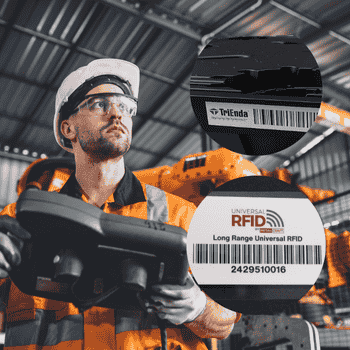
By integrating both solutions, businesses gain improved visibility across various operational settings. This dual-tracking method reduces the risk of data gaps and enhances asset traceability in warehouses, manufacturing plants, healthcare facilities, and retail environments. The added flexibility ensures critical inventory and asset data is consistently available, improving overall operational efficiency.
Using both technologies allows businesses to:
- Maintain tracking consistency across facilities equipped with different systems.
- Provide backup identification in case of RFID reader failure or poor radio waves coverage.
- Support hybrid environments with varying asset types, surfaces, and operational needs.
Future of RFID vs Barcode Technologies
Both RFID and barcode technology will continue to evolve, offering improved capabilities for businesses seeking greater visibility, efficiency, and accuracy. While RFID adoption is growing rapidly in industries that demand automation and real-time data, barcode systems remain a reliable and economical solution for inventory management, especially for small businesses or companies with limited tracking requirements.
Ultimately, the choice between RFID vs barcode depends on your specific operational goals, asset types, and budget. By understanding the unique advantages and limitations of each system, businesses can implement tracking solutions that enhance productivity, improve data accuracy, and reduce human error.
For guidance in selecting the best solution for your business, contact our RFID and barcode specialists at IDPlate.com.
About the Author: Kathleen Phillips

Mobile Phone: 641-423-9460
Office Phone: 641-423-9460
Email: [email protected]
Office: 3360 9th St SW, Mason City, IA 50401