
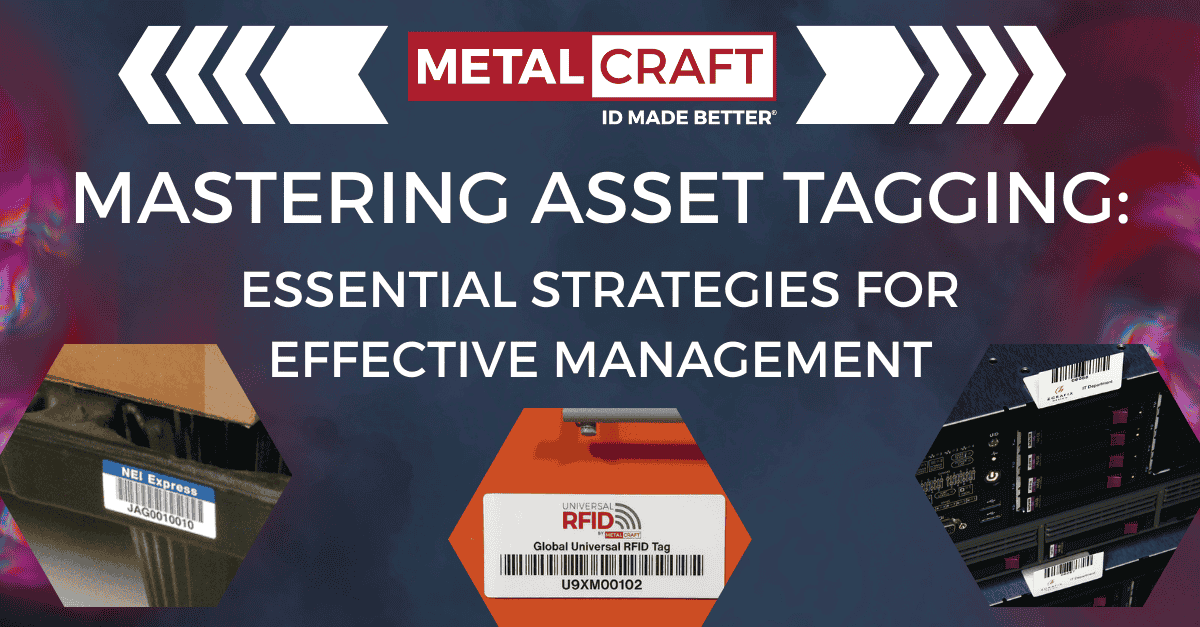
In today’s fast-paced business environment, asset tagging has become a critical tool for companies across industries. Whether you’re dealing with IT equipment, vehicles, tools, furniture, or returnable containers the ability to tag assets ensures that every item is accounted for, reducing the risks of loss prevention, theft, and inaccurate reporting. A well-designed asset tagging system allows organizations to monitor fixed and moveable assets, simplify inventory management, and streamline maintenance management.
This guide explores the asset tagging process, why asset tagging is important, and how companies can select the right metal asset labels, RFID tags, or QR codes to meet operational needs.
What Is Asset Tagging?
At its core, asset tagging is the process of attaching labels or identifiers—such as barcodes, RFID tags, or NFC tags—to assets so they can be accurately identified and tracked. This practice is essential for any organization that manages equipment, IT devices, tools, vehicles, or physical infrastructure because it provides a single, reliable method for maintaining control over valuable resources. By creating a dependable asset register containing purchase dates, serial numbers, service history, user history, and locations, businesses gain complete visibility into their resources.

Tagging is the process that transforms physical equipment into data-rich resources. Once assets are tagged, they can be scanned to retrieve information instantly, improving asset visibility, enhancing accountability, and significantly reducing the risks and inefficiencies tied to manual data entry. This ensures organizations not only know what they own, but also where it is, how it’s being used, and when it requires attention—driving smarter decisions, reducing loss, and extending asset lifespan.
Why Asset Tagging Is the Foundation of Tracking Assets
Asset tagging is the foundation of any effective asset tracking strategy because it gives businesses a clear, structured way to know what they own, where it is, and how it’s being used. By attaching durable identifiers—such as barcodes, RFID tags, or NFC tags—to equipment, IT devices, vehicles, tools, and infrastructure, organizations create a reliable record that follows each asset throughout its lifecycle.
Without a proper asset tagging system, companies face common pain points such as:
- Lost or misplaced equipment, leading to wasted time searching for items.
- Inefficient audits and reporting, often due to incomplete or inaccurate records.
- Difficulty meeting compliance requirements in regulated industries.
- Unnecessary replacement costs when assets are written off as lost but later resurface.
- Higher risk of loss from theft or unauthorized use.
For organizations managing thousands of items across multiple sites, the ability to quickly locate and track assets is invaluable. Tagging is the process that turns physical assets into data-rich, easily traceable resources—ensuring accountability and saving significant time and money.
An effective asset tagging process delivers:
- Unique identification for every item, eliminating confusion.
- The ability to quickly identify and locate valuable assets.
- Automated data collection for compliance, audits, and maintenance control.
- Enhanced loss prevention measures to prevent theft.
- Actionable insights that support smarter, data driven decisions.
In short, asset tagging isn’t just about attaching labels—it’s about establishing accountability, boosting efficiency, and safeguarding resources across all asset types.
The Asset Tagging Process: Step by Step
- Identify Assets
Businesses must start by listing all physical assets that need to be tagged. This may include IT devices, machinery, tools, vehicles, or office equipment. - Assign a Unique Identifier
Each asset receives a unique identification code or serial number, ensuring accurate differentiation between items. - Select the Right Asset Label
Options include barcode labels, QR code tags, NFC tags, or durable RFID tags designed to withstand harsh environments. Custom labels can be created to align with specific business needs. - Create an Asset ProfileInput details such as acquisition date, cost, service history, maintenance history, location, and expected lifespan into the asset tracking system.
- Tag Assets
Attach labels using adhesives or mechanical fasteners. For fixed assets, durable foil or polyester asset labels are often best, while moveable assets may require tamper-evident options to aid loss prevention. - Verify Data
Ensure that each tagged item is correctly entered in the asset tracking system. Verify details using at least two identifiers, such as serial number and barcode.
Choosing the Right Asset Labels and Tags
Types of Asset Tags and When to Use Them
Barcode & QR Codes
Barcodes have been in use since the 1970s, with the first commercial scan taking place in 1974. They consist of a series of vertical black-and-white lines that encode numbers or letters, while QR codes use a square pattern of dots and spaces to store more complex information. These tags are especially useful because they are inexpensive, easy to produce, and can be scanned quickly with handheld barcode scanners or even a smartphone camera. For businesses with large inventory volumes, barcodes and QR codes provide a simple, low-cost method for tracking assets.
RFID Tags
RFID (Radio Frequency Identification) tags enable wireless tracking by transmitting data using radio waves. Unlike barcodes, they do not require line-of-sight scanning, which makes them particularly valuable in warehouses or industries handling high-volume assets. RFID tags can be scanned in bulk, allowing dozens or even hundreds of items to be identified at once. While they offer durability and the ability to withstand harsh environments, they tend to be more expensive and require specialized RFID readers to function.
GPS Trackers
GPS (Global Positioning System) trackers work by communicating with satellites to determine the precise real-time location of an asset. They are most useful for tracking large or mobile equipment such as vehicles, shipping containers, or construction tools spread across multiple sites. The advantages of GPS include highly accurate location data and the ability to monitor moveable assets across long distances. However, they are more costly than other tag types, require power (batteries or a direct connection), and are less effective indoors where satellite signals may be blocked.
NFC Tags
NFC (Near Field Communication) tags are a subset of RFID technology designed for close-range use. They allow two-way communication between the tag and a reader (such as a smartphone), enabling organizations to retrieve information like service history, warranty details, or user history directly from the tag. NFC tags are ideal for IT devices, tools, or assets that require frequent interaction. Their advantages include secure, fast data transfer and compatibility with smartphones, but their short read range (just a few centimeters) and lower data capacity compared to RFID are potential drawbacks.
| Tag Type | How It Works | Best For | Advantages | Limitations |
|---|---|---|---|---|
| Barcodes and QR Codes | Printed labels scanned with handheld readers or smartphones. | Warehouses, stockrooms, office equipment and large-scale inventory management | Low cost, easy to implement, universally recognized, quick scanning with smartphones. | Requires line-of-sight, limited durability in harsh environments, can wear off over time. |
| RFID Tags | Use radio-frequency identification to transmit data without direct scanning | Large volumes of assets, industries needing fast bulk scanning (e.g., retail, manufacturing). | Long read range, bulk scanning, durable, can withstand harsh environments. | Higher cost, requires RFID readers, can be affected by metal or liquid interference. |
| GPS Trackers | Communicate with satellites to provide real-time location data | Vehicles, shipping containers, heavy equipment or large moveable assets | Provides precise, real-time location, great for outdoor tracking across multiple sites | Expensive, requires power source, less effective indoors. |
| NFC Tags | Near Field Communication technology enabling two-way data transfer | IT assets, tools or equipment that need frequent user history or service history updates | Fast, secure, enables retrieval of information via smartphones, stores more asset data. | Very short read range, requires close contact, limited data capacity compared to RFID. |
Benefits of Asset Tagging Systems
Enhanced Asset Visibility
By tagging IT equipment, machinery, vehicles, and tools with barcodes, RFID, GPS, or NFC labels, businesses gain real-time asset visibility across multiple sites. Managers can instantly locate high value assets, prevent loss or theft, and ensure accurate records for audits, reporting, and smarter decision-making.
Cost Savings Through Loss Prevention
Industries lose millions each year from stolen equipment and misplaced assets. Using the right tag type—barcodes, QR codes, RFID tags, GPS trackers, or NFC tags—reduces risk. Materials and durability vary by environment and asset value, while tamper-evident labels and digital logs enhance accountability and loss prevention.
Assign Unique ID
All assets should be tagged with a unique ID to build accurate profiles that link to service history and maintenance history. This enables preventive maintenance, reduces costly downtime, and integrates seamlessly with maintenance control systems, ensuring reliability, extending asset life, and improving overall operational efficiency.

Smarter Data-Driven Decisions
Accurate tagging ensures system asset data matches assigned details such as serial numbers, manufacturer, purchase date, location, and condition. With complete profiles, companies can analyze performance, decide whether to repair or replace equipment, and identify usage trends across departments—enabling smarter, data driven decisions that maximize value.
Input into the System
Accurate records should be entered into asset management software, ERP platforms, or centralized databases. These systems ensure reliable tracking of owned assets, reduce risks during audits, and streamline financial reporting, including depreciation. Consistent data entry strengthens compliance, improves accountability, and provides a single source of truth for asset visibility.
Track and Update
Arguably the most important step, tracking ensures each asset is monitored as it moves, is serviced, or depreciates. Regular updates within asset management systems maintain accuracy, support compliance, and provide visibility. This continuous oversight maximizes asset value, reduces risk, and ensures decisions reflect real-time conditions.
Asset Tagging FAQ
What is an asset tag?
An asset tag is a label or identifier, such as a barcode, QR code, RFID tag, or NFC tag, that is affixed to an asset for unique identification. Asset tags allow businesses to track assets, link them to an asset register, and capture essential asset data like serial number, purchase date, and service history.
How durable is an asset tag?
The durability of an asset tag depends on the material and application. Basic paper labels may suffice for office use, but asset labels designed to withstand harsh environments—such as polyester, foil, or metal tags—are recommended for fixed assets and high value assets. Durable tags ensure long-term asset visibility and reduce replacement costs.
What’s the difference between an inventory tag and an asset tag?
An inventory tag is often used for short-term tracking of stock or consumables in inventory management. In contrast, an asset tag is applied to physical assets—such as IT equipment, vehicles, or tools—to provide a unique identifier and enable ongoing asset tracking through an asset tagging system.
Can I customize asset tags with company logos or colors?
Yes, many suppliers allow businesses to print custom labels with logos, colors, or barcodes. Custom labels not only reinforce branding but also make it easier to quickly identify owned assets across multiple sites. Options include tamper-evident labels for loss prevention or specialized tags for maintenance management and compliance.
What materials are best for outdoor or heavy-duty asset tagging?
For assets exposed to harsh environments or challenging environmental conditions, materials like anodized aluminum, foil, or laminated polyester are recommended. These asset labels are designed to withstand harsh environments such as extreme weather, chemicals, or heavy handling, making them ideal for tagging equipment, vehicles, and moveable assets.
Choosing the Best Tags for Your Business
The right asset tagging system depends on your industry and asset types. For warehouses with large inventory, barcodes and QR codes are cost-effective. For bulk scanning or moveable assets, RFID tags excel. GPS trackers are best for vehicles, while NFC tags support interactive tracking and retrieve information quickly via smartphones. Choosing the right mix of tags ensures better control, stronger loss prevention, and improved efficiency.
About the Author: Marianne Alvarado

Mobile Phone: 641-529-9492
Office Phone: 641-423-9460
Email: [email protected]
Office: 3360 9th St. SW, Mason City, IA 50401