
QR Codes vs. Data Matrix Codes: Two Powerful 2D Barcode Technologies
QR codes and Data Matrix codes are both two-dimensional (2D) barcodes, designed to store data in both vertical and horizontal directions—offering much greater data capacity than traditional one-dimensional barcodes.
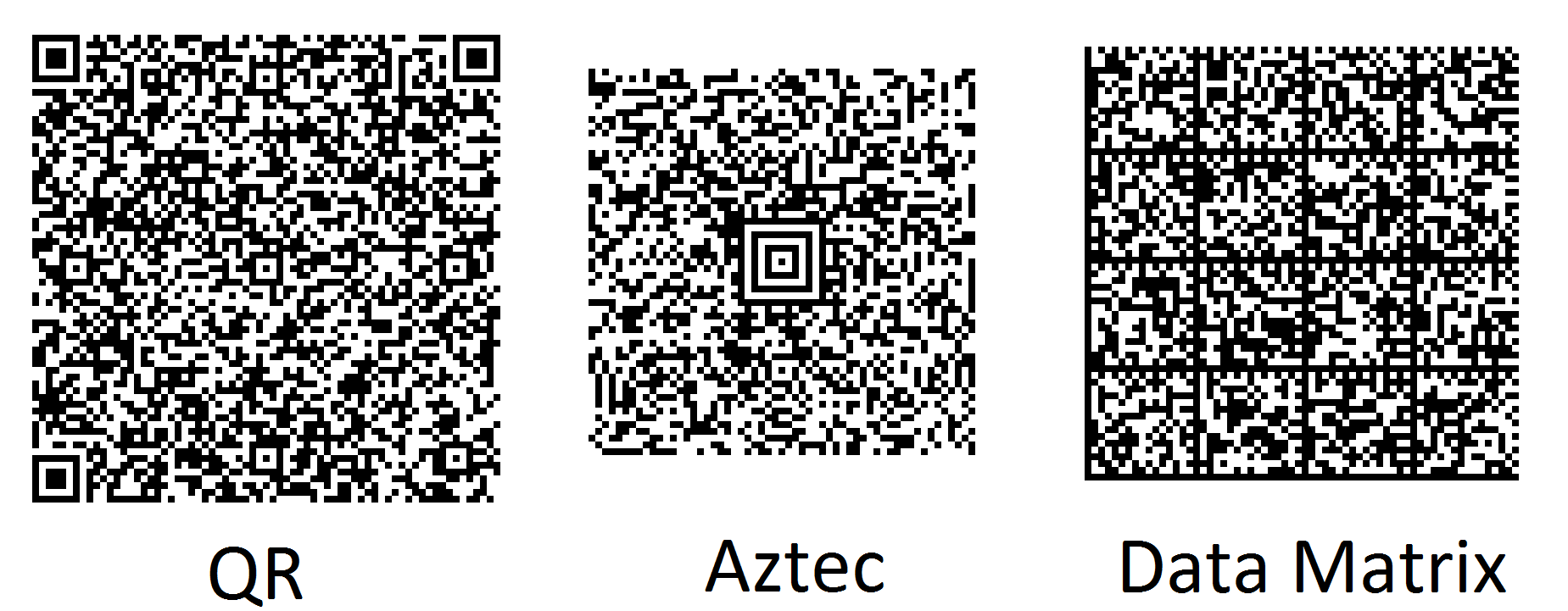
A QR code (Quick Response code) features three square structures for alignment and is widely used in consumer applications due to its smartphone compatibility and ease of use. It’s ideal for linking to websites, digital payments, and promotions.
In contrast, a Data Matrix code consists of black and white cells arranged in a square or rectangular pattern, with an L-shaped finder pattern and timing patterns for precise scanning. Its compact design makes it ideal for marking small components in aerospace, automotive, and medical industries, where space is limited and durability is crucial.
While both can encode alphanumeric characters and large volumes of data, Data Matrix codes are optimized for high-density encoding, robust error correction, and industrial environments. QR codes, on the other hand, excel in consumer-facing and interactive applications.
Core Characteristics of Data Matrix Barcodes
To understand the advantages of a Data Matrix code, it’s essential to break down its physical structure and functional components. The following core characteristics highlight what makes the Data Matrix barcode uniquely suited for encoding large amounts of data in compact, durable formats, especially in space-constrained or industrial environments.
- Shape: Typically appears as a square or rectangular pattern composed of black and white cells, making it highly space-efficient for encoding data on small components and surfaces.
- Data Capacity: Can encode up to 2,335 alphanumeric characters or 3,116 numeric characters, allowing for the storage of large amounts of data in a two-dimensional barcode format.
- Key Components:
- Finder Pattern: An L-shaped solid border on two sides of the code, used by scanners to determine the orientation and alignment of the symbol.
- Timing Pattern: A series of alternating dark and light modules along the other two borders, which help define the grid structure and improve readability.
- Data Region: The central grid of black and white cells that encodes the actual data, including alphanumeric and numerical information.
- Quiet Zone: A clear margin surrounding the symbol that ensures accurate detection by barcode scanners, free from text or graphics.
- Symbol Sizes: Available in various matrix sizes, ranging from 10×10 to 144×144 modules for square formats, and 8×18 to 16×48 for rectangular formats—allowing code size to be optimized based on data volume and physical space.
- Density: Offers high module density, making it ideal for marking very small components, including microchips, circuit boards, and medical devices where less space is available but more data is required.
Data Matrix vs QR Code: Key Differences
Both Data Matrix barcodes and QR codes are 2D barcodes, but they serve different roles:

While QR codes offer excellent consumer interaction, such as for registration promotions, Data Matrix codes are optimized for product identification, direct part marking, and small-area labeling, making them invaluable in the manufacturing process.
Technical Standards and Error Correction
ECC 200 and Reed-Solomon Error Correction
The ECC 200 standard is the most widely used and advanced version of the Data Matrix code. It integrates Reed-Solomon error correction, a powerful algorithm that ensures the reliable recovery of encoded information even if the symbol is partially damaged or obscured.
- ECC 200 enables the reconstruction of data from up to 30% physical damage to the code.
- In real-world industrial applications—especially in harsh environments—Data Matrix barcodes have been successfully read even when up to 60% of the code is compromised, thanks to this robust error correction capability.
- This resilience makes ECC 200 ideal for applications like direct part marking on metal, plastic, or ceramic surfaces where abrasion, corrosion or chemical exposure may occur.
Symbol Construction Rules for Data Matrix Codes
To ensure compatibility, reliability, and global interoperability, Data Matrix codes must be constructed according to strict guidelines:
- Standard Compliance: All symbols must comply with ISO/IEC 16022, the international standard governing Data Matrix barcode structure, encoding, and placement.
- Shape Flexibility: While square patterns are preferred for maximum encoding density, rectangular patterns are permissible when space constraints or label dimensions require an elongated shape.
- Data Encoding Capabilities: The code must support encoding of both numerical data and alphanumeric characters, enabling versatile use across different industries and applications.
- Each symbol must include a clearly defined:
- Finder pattern for orientation
- Timing pattern for grid definition
- Quiet zone surrounding the symbol to ensure accurate decoding by barcode scanners
Adhering to these rules guarantees that the Data Matrix code remains readable, durable, and interoperable with standard scanning equipment across various environments.
Applications and Use Cases of Data Matrix Codes
Industrial Applications
Data Matrix codes are extensively used in high-precision and high-accountability industries where space constraints, data accuracy, and traceability are critical. Their compact size, robust error correction, and long-term durability make them indispensable in the following sectors:
- Aerospace
Aircraft parts are often engraved or laser-marked with Data Matrix barcodes directly on metal surfaces. This ensures traceability across the entire product lifecycle—from manufacturing and inspection to in-flight maintenance and eventual decommissioning. These codes enable compliance with strict aviation regulations and help identify parts even after long-term use in extreme conditions. - Medical Devices
The healthcare industry relies on Data Matrix codes for marking plastic and ceramic components of surgical instruments, implants, and reusable equipment. These compact codes allow for precise identification of medical tools, supporting UDI (Unique Device Identification) requirements and improving patient safety, sterilization tracking, and asset control in clinical environments.
- Automotive
From engine control units to wiring harnesses and brake systems, Data Matrix barcode labels are used to tag and trace countless components across the automotive supply chain. Their resilience under high heat, vibration, and chemical exposure makes them ideal for marking components that must endure tough manufacturing and operational environments.
Manufacturing and Traceability
Data Matrix codes are a backbone of modern smart manufacturing and logistics systems, offering unmatched visibility and control over complex production and distribution operations.
- Inventory Management Systems
These codes are used to identify and track individual components, subassemblies, and finished goods in real time. Their high data capacity allows them to store serial numbers, batch codes, and manufacturing dates in a format that takes up less space than traditional labels. - Direct Part Marking (DPM)
By applying Data Matrix codes directly to product surfaces through dot peen, laser etching, or chemical etching, manufacturers can achieve permanent, tamper-resistant identification. This is essential for ensuring traceability throughout a part’s lifespan, especially for critical or regulated components. - Supply Chain Management
As goods move from production to packaging, shipping, and delivery, Data Matrix barcodes provide a two-dimensional method of recording and retrieving tracking data, supporting supply chain visibility, reducing bottlenecks, and minimizing human error. - Product Lifecycle Tracking
From raw material acquisition to recycling and disposal, each stage of a product’s journey can be logged using a Data Matrix code, enabling full traceability, compliance audits, and quality assurance programs. - Manufacturing Line Integration
These codes integrate seamlessly into automated production lines, where they are scanned by high-speed barcode scanners or camera-based systems to verify part identity, trigger robotic operations, and log process data without disrupting production flow.
Reading and Scanning Methods
Data Matrix codes are engineered for efficient scanning in industrial and commercial environments. Their readability remains high even at small sizes or under suboptimal conditions.
Compatible Scanning Technologies
- Barcode Scanners: Handheld or fixed-mount scanners are widely used in factories, warehouses, and quality inspection points for fast and accurate decoding.
- Camera-Based Systems: Mobile devices, tablets, and industrial vision systems with imaging software can capture and interpret Data Matrix barcodes, making them useful for both consumer-level and enterprise-level applications.
- Laser Scanners: Though less common for 2D codes, some high-end laser scanners may support Data Matrix barcode reading, especially in controlled setups.
Verification and Compliance Standards
- ISO/IEC 15415: This standard governs print quality grading for 2D barcodes, including Data Matrix codes, ensuring consistent and scannable results across materials and printers.
- ANSI/AIM DPM-1: This standard defines quality parameters for direct part marking on ceramic, glass, and metal surfaces, ensuring durability and readability under rugged conditions.
Environmental Durability and Testing
Data Matrix codes are highly robust and undergo rigorous testing to ensure performance in industrial and environmental extremes. They excel in:
- Temperature Cycling Tests: Verifying that code readability remains stable after repeated exposure to extreme heat and cold.
- Humidity Resistance Evaluations: Ensuring code clarity and adhesion in high-moisture environments such as medical sterilization or marine transport.
- Chemical Exposure Studies: Testing durability when exposed to solvents, lubricants, and industrial cleaning agents used in aerospace and automotive industries.
These tests confirm that Data Matrix barcodes maintain functionality even when applied to small electronic components and plastic or metal parts exposed to challenging conditions.
Cost Analysis and ROI with Preprinted 2D Labels
Initial Costs
Hardware Investment
Preprinted 2D labels significantly reduce initial hardware outlay. Since labels arrive encoded and ready for application, there is no need to invest in onsite barcode printers, engraving tools, or data matrix marking systems. However, basic scanning and verification hardware, such as handheld 2D barcode scanners or automated vision systems (especially for integration in high-speed manufacturing lines), is still required.
Software Licensing
Minimal software infrastructure is needed when using preprinted labels. While label creation software and print drivers are essential for onsite label generation, preprinted labels eliminate this cost. Companies may still require basic inventory or WMS integration tools and 2D barcode verification utilities for quality assurance.
Long-Term Benefits
Operational Savings
Preprinted 2D labels streamline workflows by removing the need for on-demand printing, reducing consumable usage, maintenance, and operator time. In manufacturing and logistics, this leads to faster implementation and fewer interruptions, translating into substantial operational savings over time.
Error Reduction
Preprinted labels produced under controlled conditions by label specialists ensure high-quality printing and precise data encoding. With ECC 200 error correction (standard in Data Matrix and QR codes), even slightly damaged labels remain scannable, minimizing production line stoppages, returns, or manual data entry corrections.
Efficiency Gains
2D preprinted labels enable immediate deployment and standardized application across products, parts, and assets. Combined with automated scanning systems, they provide real-time traceability and reporting with minimal setup time. This results in faster cycle times, better compliance with industry standards (e.g., UDI, MIL-STD-130), and enhanced visibility across supply chains.
Future Innovations and Trends
As industries evolve, Data Matrix barcodes continue to adapt with new features and integration capabilities:
- Next-Generation Standards:
Emerging updates to ECC algorithms and encoding efficiency will support even higher data capacities in smaller spaces. - Blockchain Integration:
Enabling end-to-end traceability through secure, verifiable chains of custody—from raw materials to final distribution. - AI-Enhanced Verification:
Smart scanners and vision systems powered by AI will offer faster decoding, damage detection, and automatic grading of code quality. - Improved Matrix Sizes:
Refined symbol construction techniques will allow for reduced scanning time without compromising data integrity.
Best Practices for Implementation
Planning and Deployment
- Requirements Gathering:
Identify the use case, surface material, environmental exposure, and data volume needed for each label. - Code Size Optimization:
Choose the smallest code size possible that still meets data capacity and scanning reliability requirements, especially for small components. - Phased Rollout:
Begin implementation in targeted areas or product lines, evaluate system performance, and scale based on feedback and analytics.
Maintenance and Optimization
- Routine System Audits:
Regularly inspect scanners, printers, and printed codes to maintain high decoding performance. - Performance Benchmarking:
Use test labels and simulated conditions to monitor how well systems perform over time and under stress. - Standards Compliance:
Ensure adherence to ISO/IEC 16022, GS1 DataMatrix, and applicable industry-specific standards for traceability and interoperability.
About the Author: John Fitzsimmons

Mobile Phone: 641-423-9460
Office Phone: 641-423-9460
Email: [email protected]
Office: 3360 9th St SW