

In modern supply chains and container logistics, organizations must track containers, totes, bins, and shipping containers across increasingly complex networks. Traditional manual scanning and barcode systems rely on human input and line-of-sight visibility—two major limitations that slow operations and create accuracy gaps.
RFID container tracking uses radio frequency identification to automate container identification and location updates without manual checks, delivering real-time tracking, greater data accuracy, and streamlined container management. By enabling continuous tracking with minimal labor, RFID technology significantly improves operational efficiency across warehouses, container yards, port gates, and the global supply chain.
What Is RFID Container Tracking?
RFID, or radio frequency identification, is an advanced technology that uses radio waves to transmit data from an RFID tag to an RFID reader. Each tag carries a unique identifier, allowing organizations to track containers as they move through the supply chain.
RFID container tracking applies this technology at the container level. That means each container—whether a plastic bin, metal tote, returnable transport item (RTI), or large shipping container—is tagged so the system can automatically track container movement, locations, and status.
In closed-loop supply chains, especially those using returnable packaging, container tracking systems ensure assets circulate efficiently between production, distribution, and return points. Because every tagged container is accounted for in the RFID system, organizations gain a comprehensive view of container locations, usage cycles, and loss points.
How RFID Container Tracking Works
RFID container tracking relies on three main components: tags, readers, and software. Together, these elements create a continuous tracking process that supports real-time visibility across logistics operations.
Tags
An RFID tag attaches directly to the container. RFID tags can be passive, battery-assisted, or an active tag powered by a battery. The tag stores a unique ID and additional data generated during its journey.

Different tags are designed for:
- Plastic or metal containers
- Harsh outdoor environments
- Reusable cycles and wash processes
- Long-range reads in stacked storage
In a passive RFID tracking system once applied, each tagged container automatically broadcasts data when it encounters a reader’s signal.
Readers
RFID readers capture tag information using radio waves. Readers can be installed at:
- Dock doors
- Port gates
- Yard entry/exit points
- Warehouse chokepoints
- Conveyor lines
- Production transitions
Readers installed in these strategic areas enable real-time location data and eliminate the need for manual scanning. As containers move, the RFID system identifies their exact location without human intervention.
Software
RFID container tracking software—or a module integrated into existing systems like transportation management systems (TMS) or supply chain management platforms—creates a centralized view of all container locations.
Software provides:
- Real-time visibility
- Movement history
- Sensor readings from IoT sensors
- Alerts for unauthorized access attempts
- Status updates in major ports
- Integration with existing logistics systems
The central database aggregates a vast amount of data, enabling organizations to identify bottlenecks, reduce theft, and make more informed decisions across the container’s journey.
RFID vs Barcode Container Tracking
Below is a quick, scannable comparison of the two technologies:
| Category | Barcode | RFID |
|---|---|---|
| Line-of-sight | Required | Not required—tags can be read through materials or in stacked containers |
| Speed | One-at-a-time manual scans | Hundreds of reads per second |
| Labor | High manual labor and manual input | Minimal labor and no manual scanning |
| Accuracy | Vulnerable to human error and missed scans | Highly accurate tracking with automated reads |
| Cost | Lower startup cost | Higher initial cost but long-term reduced labor costs and less container loss |
| Ideal Environments | Simple, low-volume programs | Complex, high-volume logistics operations needing real-time visibility |
When to Use RFID for Containers
Containers are strong candidates for RFID when you face:
- High-volume moves that overwhelm barcode-based manual labor
- Frequent cycles where reusable containers constantly circulate between locations
- Lots of misplacements causing lost assets and high replacement costs
- Manual scanning bottlenecks slowing down receiving, shipping, or production
- WIP (work in process), yard, dock door, or staging area tracking needs
- Requirements to track containers across multiple facilities or major ports
If your operation depends on accurate tracking, fast throughput, and minimized human error, RFID for container tracking offers a measurable advantage.
Benefits of RFID Container Tracking
Real-time location and continuous tracking
RFID provides real time tracking—a major upgrade from manual checks. You can see the exact location of each container, even in large yards or stacked storage areas.
Better audits and accurate tracking
Automated data entry improves data accuracy and reduces human error in inventory counts or cycle audits.
Fewer lost containers
RFID greatly reduces container loss by enabling real-time visibility, alerts, and continuous tracking across facilities.
Lower replacement cost
By knowing where containers actually are, companies avoid unnecessary spending on replacement bins or totes.
Faster receiving and shipping
RFID readers installed at dock doors or port gates detect container movement automatically, cutting labor and accelerating throughput.
Long-range reads for stacked totes
RFID technology excels where barcodes fail—deep inside stacks, behind materials, or in low-light environments.
Enhanced security
The system detects unauthorized access attempts, unexpected container movement, or deviations from planned routes.
Integration with AI and IoT sensors
Artificial intelligence applied to the data can identify patterns, predict shortages, and optimize container management. IoT sensors add condition, temperature, or shock data during the container’s journey.
Overall operational efficiency
By removing manual labor, improving data accuracy, and providing a comprehensive view of container movement, RFID significantly increases overall efficiency in logistics operations.
Challenges and Misconceptions
Even with its advantages, there are considerations to keep in mind:
- Tags must match surface type
Metal, plastic, and painted surfaces require different RFID tags for optimal performance. - Read range varies
Factors like tag type, reader power, orientation, and environment influence how far away the reader can detect tags. - RFID can be overkill for simple programs
If a program is low-volume, storage-only, and rarely audited, barcodes may still be sufficient.
How to Choose the Right RFID Tag
Choosing the correct RFID tag is critical to achieving accurate tracking and maximizing read performance. Here are recommended Metalcraft RFID tag types for different environments:
For Metal Containers and Racks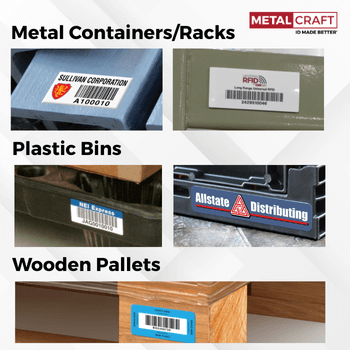
For Plastic Bins
For Wooden Pallets
The right tag ensures reliable reads, accurate tracking, and long-term performance throughout the container’s journey.
The Breakdown
RFID container tracking = real-time, automated visibility for high-volume container workflows.
By integrating RFID technology into container tracking systems, organizations gain accurate tracking, reduced labor costs, enhanced security, and a comprehensive view of container movement across the global supply chain. RFID simplifies container management, improves data accuracy, reduces theft, and helps track shipping containers more cost effectively—all while boosting overall operational efficiency.
See our Container Tracking Products to compare tag options.
About the Author: Kathleen Phillips

Mobile Phone: 641-423-9460
Office Phone: 641-423-9460
Email: [email protected]
Office: 3360 9th St SW, Mason City, IA 50401